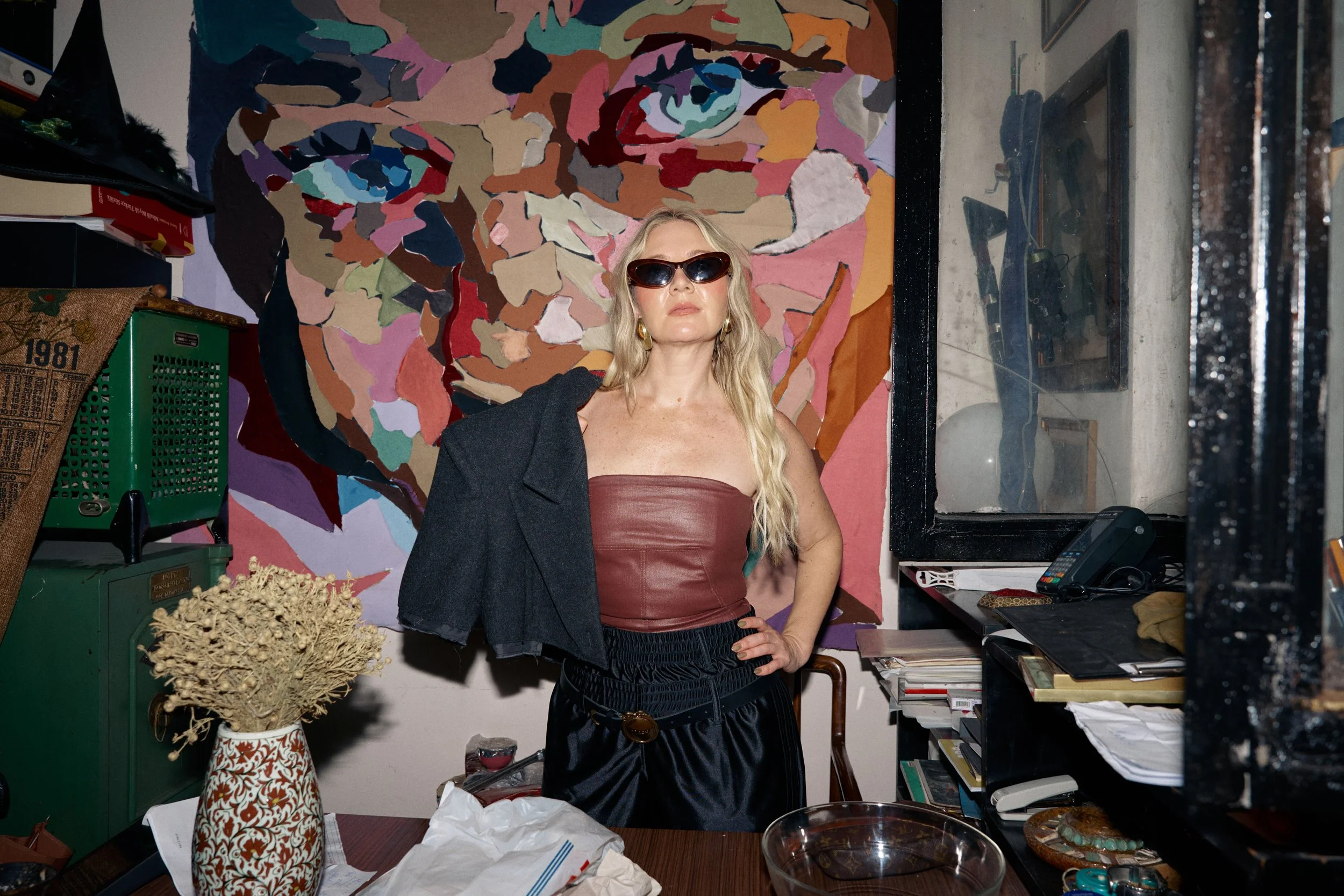
The Istanbul Edit: Art, Antiques and the Art of Discovery
I came to Istanbul for Contemporary Istanbul. I left thinking about everything that happened around the fair.
Istanbul surprised me.
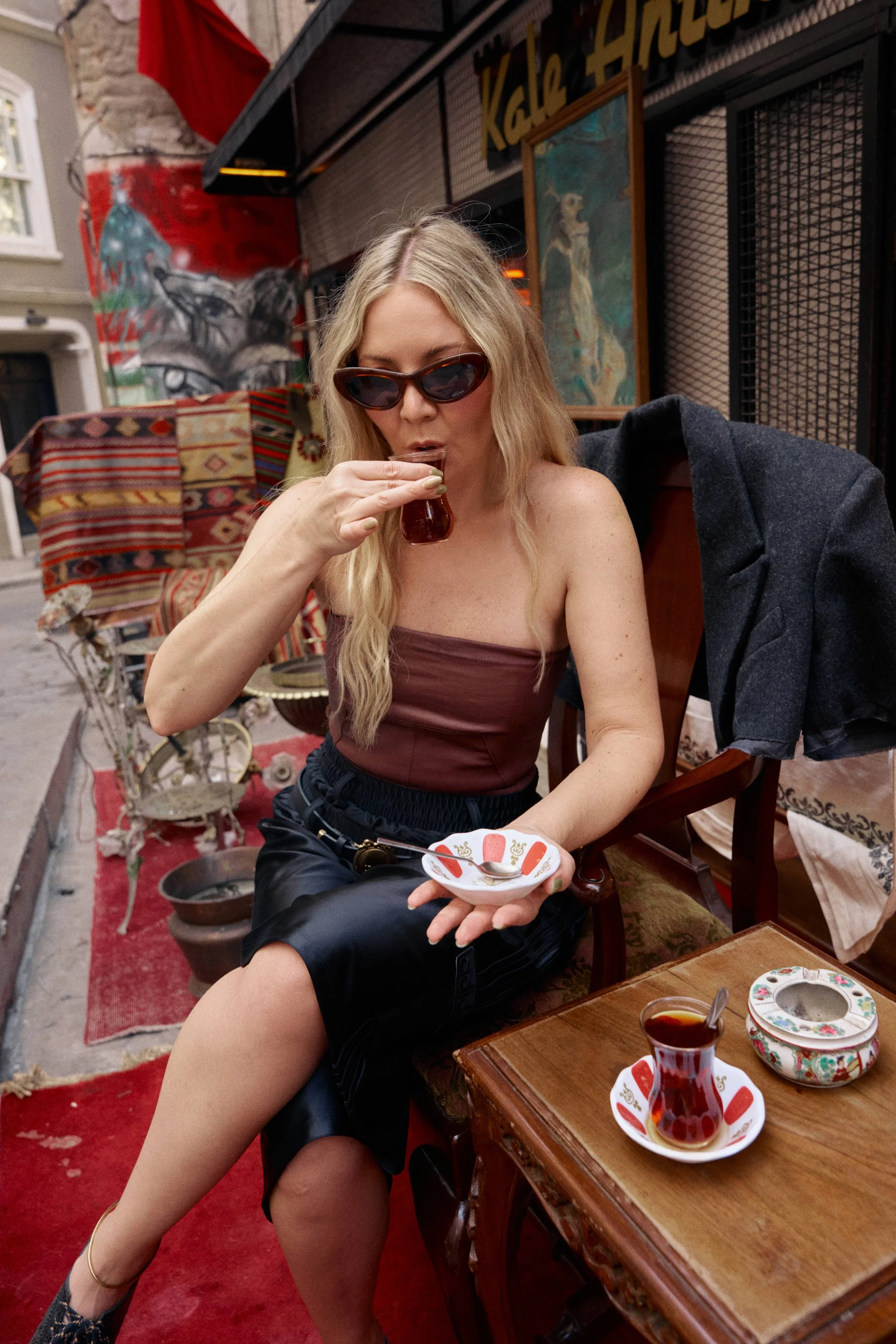
For a city of more than 15 million people, it can feel remarkably intimate. People are genuinely kind. Tea appears constantly. Then coffee. Then sweets. Shopkeepers want to talk. People want to show you things. There is a generosity to the way you are welcomed that quickly changes your relationship with the city.
And Istanbul rewards curiosity.
Some of its best discoveries aren't immediately visible from the street. They're behind doors, upstairs, down narrow streets and inside buildings where you have absolutely no idea what you're about to find. At times, wandering Istanbul felt like being on a very sophisticated treasure hunt.
The antiques are exceptional. Not "cute vintage shop" exceptional, rooms filled with serious furniture, textiles, ceramics, lighting and objects spanning centuries. A single space might move from something that feels straight out of the 1700s to mid-century design to contemporary pieces without apology.
That mix is everywhere.
Art, food, interiors and fashion aren't treated as separate disciplines here. The presentation of a plate matters. A shop matters. A room matters. Old and new coexist constantly.
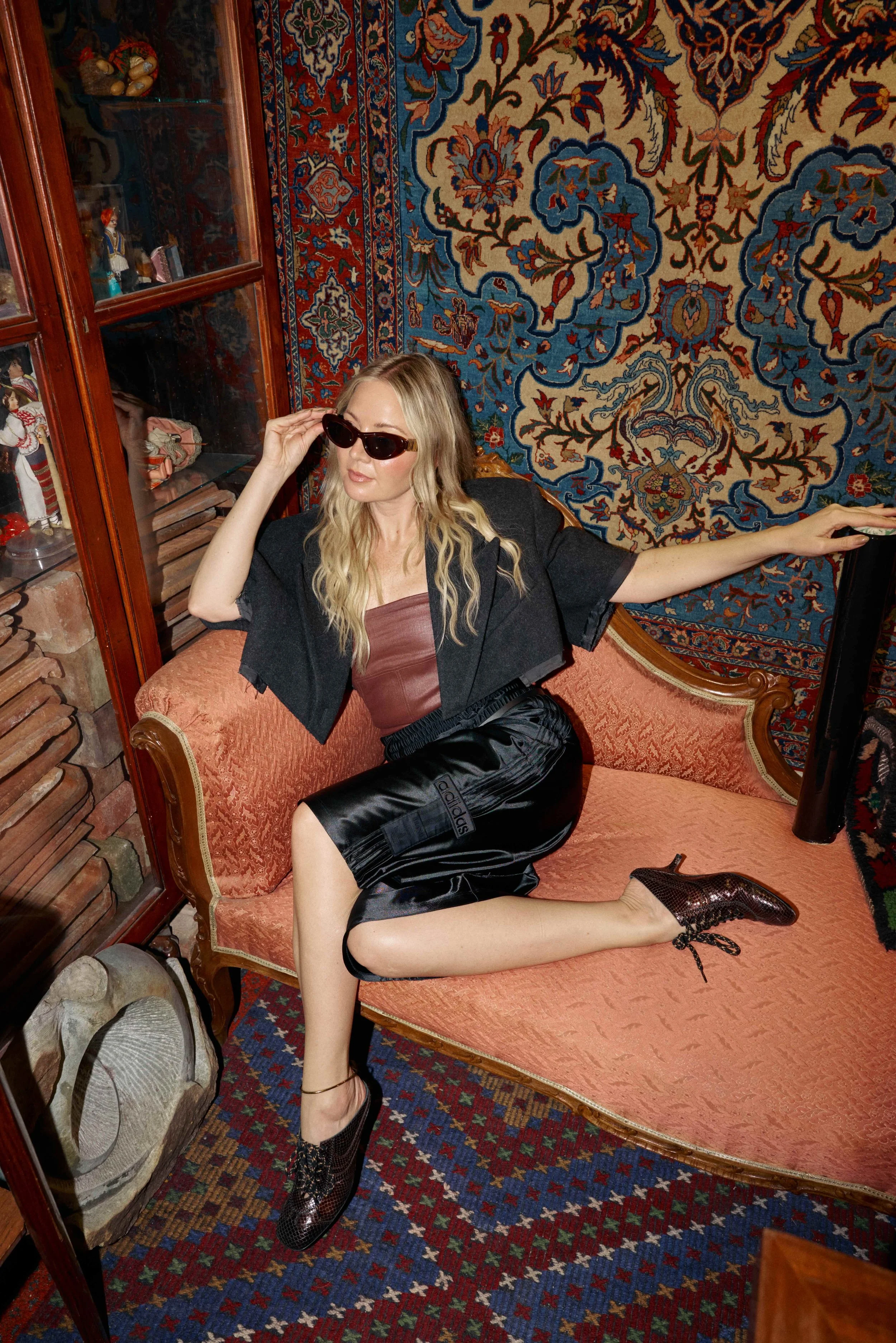
And then there are the sunglasses.
Istanbul apparently has a spectacular vintage eyewear scene, which was information I did not possess before arriving and information my credit card probably did not need me to acquire.
Naturally, I bought a pair. Or two.
COME FOR THE ART
The reason I was in Istanbul was Contemporary Istanbul, which invited me to experience its 20th edition and, importantly, the city surrounding it.
Before the fair, Contemporary Istanbul organized two private cultural tours designed to give us context for what we were about to see.
The first took us through Beyoğlu, Galata, Pera, Çukurcuma and Cihangir—neighbourhoods shaped over generations by artists, diplomats, intellectuals and different cultural communities. We moved between 19th-century architecture, passages, ateliers, galleries and antique shops.
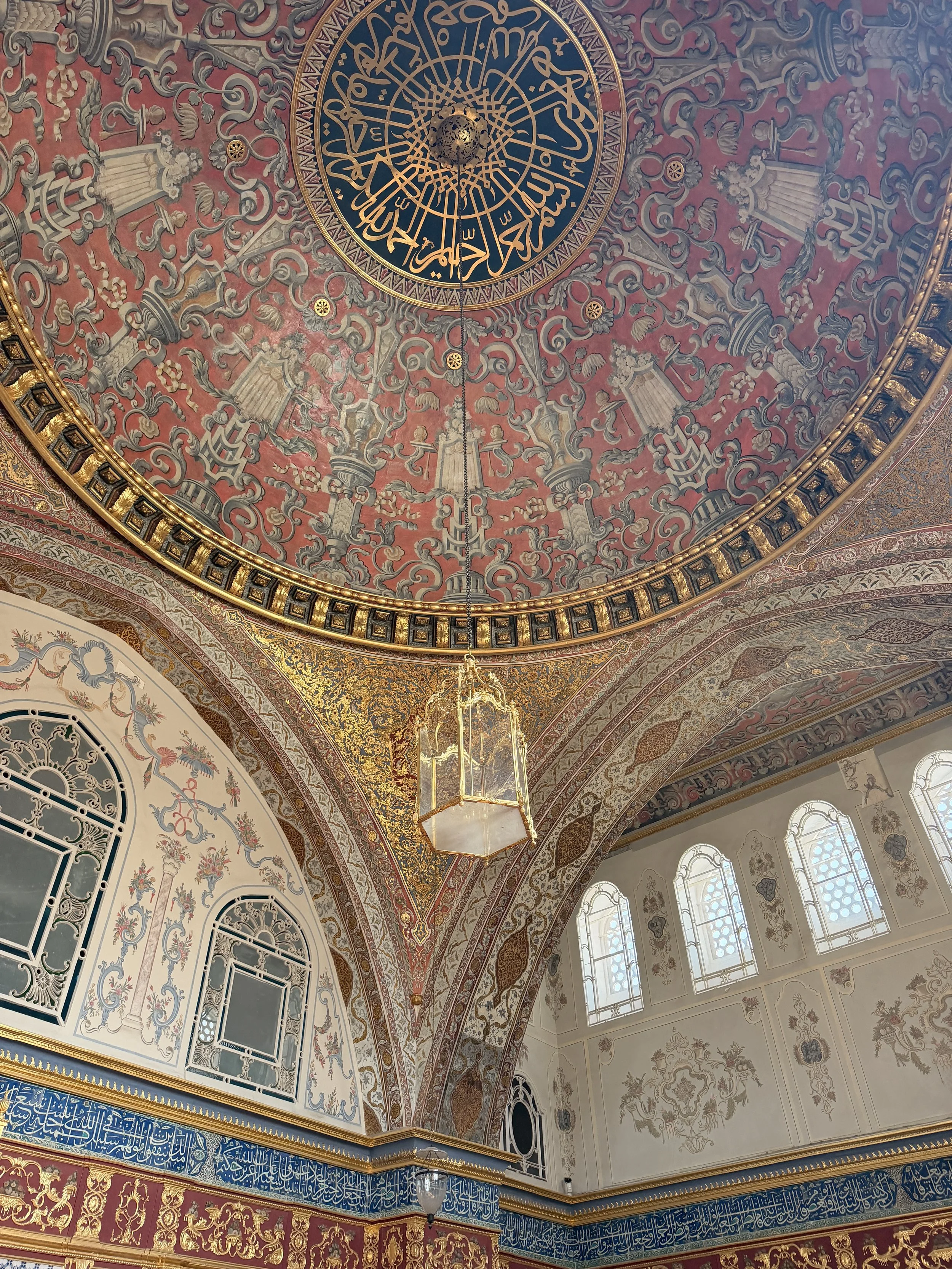
The following day went much further back, exploring Istanbul's Ottoman history through Topkapı Palace, the Blue Mosque and Hagia Sophia.
I'm glad the fair began this way.
It is easy to arrive somewhere, photograph beautiful things and leave. Understanding some of the history made me more present for everything that followed—the architecture, decorative arts, objects, food and eventually the contemporary art itself.
I'll be writing separately about Contemporary Istanbul and the artists and galleries I discovered there once I've had a little time to digest it all.
For now, this is my Istanbul edit: the places I'd go back to and the experiences I wouldn't skip.
THE ANTIQUE HUNT
Istanbul takes antiques seriously. Give yourself an afternoon in Çukurcuma, but don't expect everything worth finding to announce itself from the street. Some of the best places are behind doors you would otherwise walk straight past.
DEF GO.
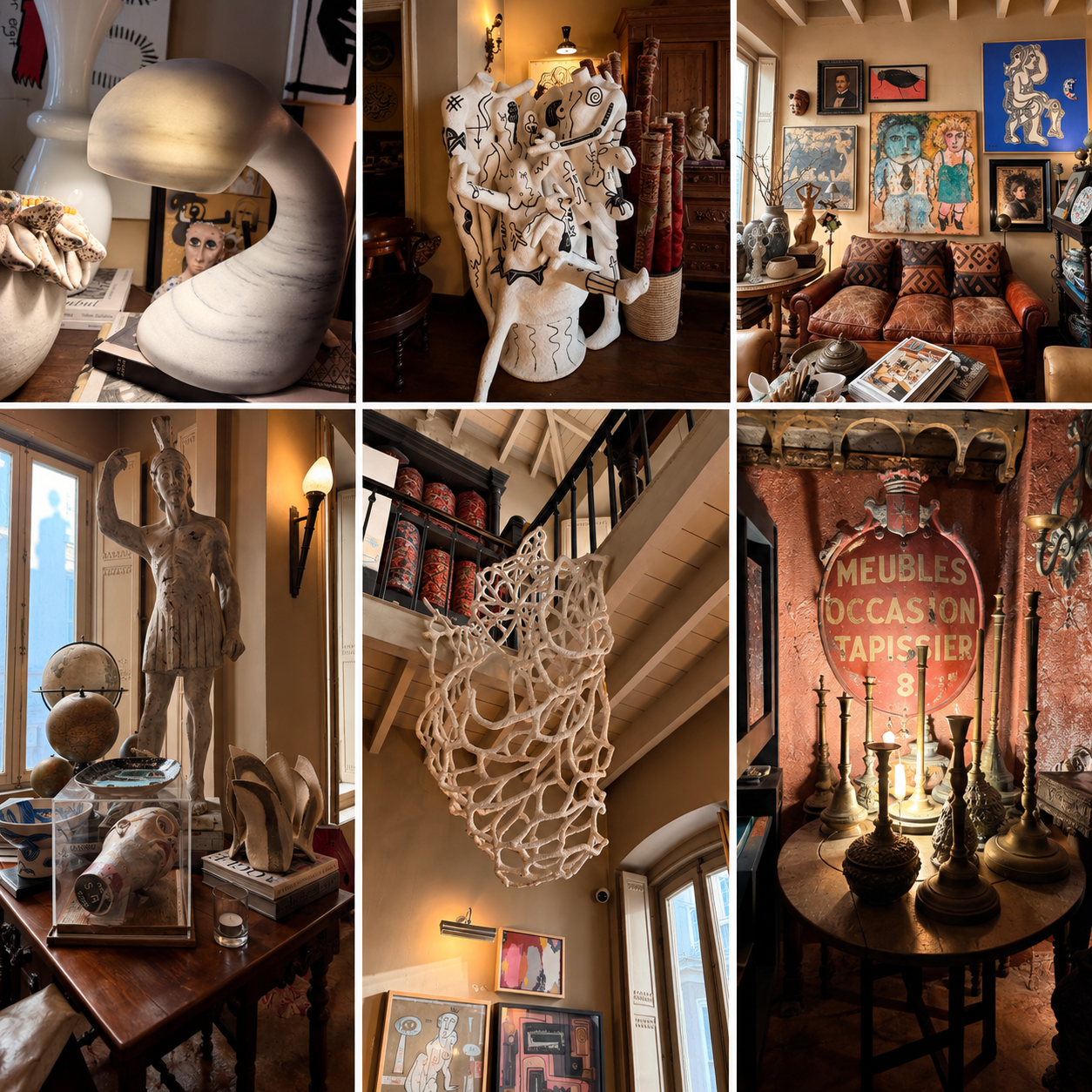
If there is one place that captures the joy of collecting in Istanbul, it's Alaturca House.
Housed in a 19th-century, four-storey townhouse in Çukurcuma, Alaturca belongs to collector and textile expert Erkal Aksoy and functions somewhere between a private salon, museum, gallery and collector's home.
Every surface seems to hold something worth examining: rare Anatolian kilims, antique pottery, Ottoman textiles and cushions, African pieces, furniture and contemporary Turkish art. But it doesn't feel arranged like a museum—or even really like a shop. Things from completely different periods and places are layered together because someone loved them enough to bring them home.
My favourite piece wasn't an antique at all.
Suspended above the staircase was an enormous contemporary work by a local ceramic artist that looked almost like a fishing net floating through the house. I immediately asked if I could buy it.
I could not.
And weirdly, I loved that.
Not everything at Alaturca exists to be sold. Some things are simply part of Aksoy's collection because he wants to live with them. You can wander, ask questions, have tea and discover what he's discovered.
This is a place for the joy of collecting.
Not because something matches the sofa. Not because someone told you it's important. Because you saw something, felt something and couldn't stop thinking about it.
Then ask to see Alaturca Modern, the sister space—and an entirely different world.
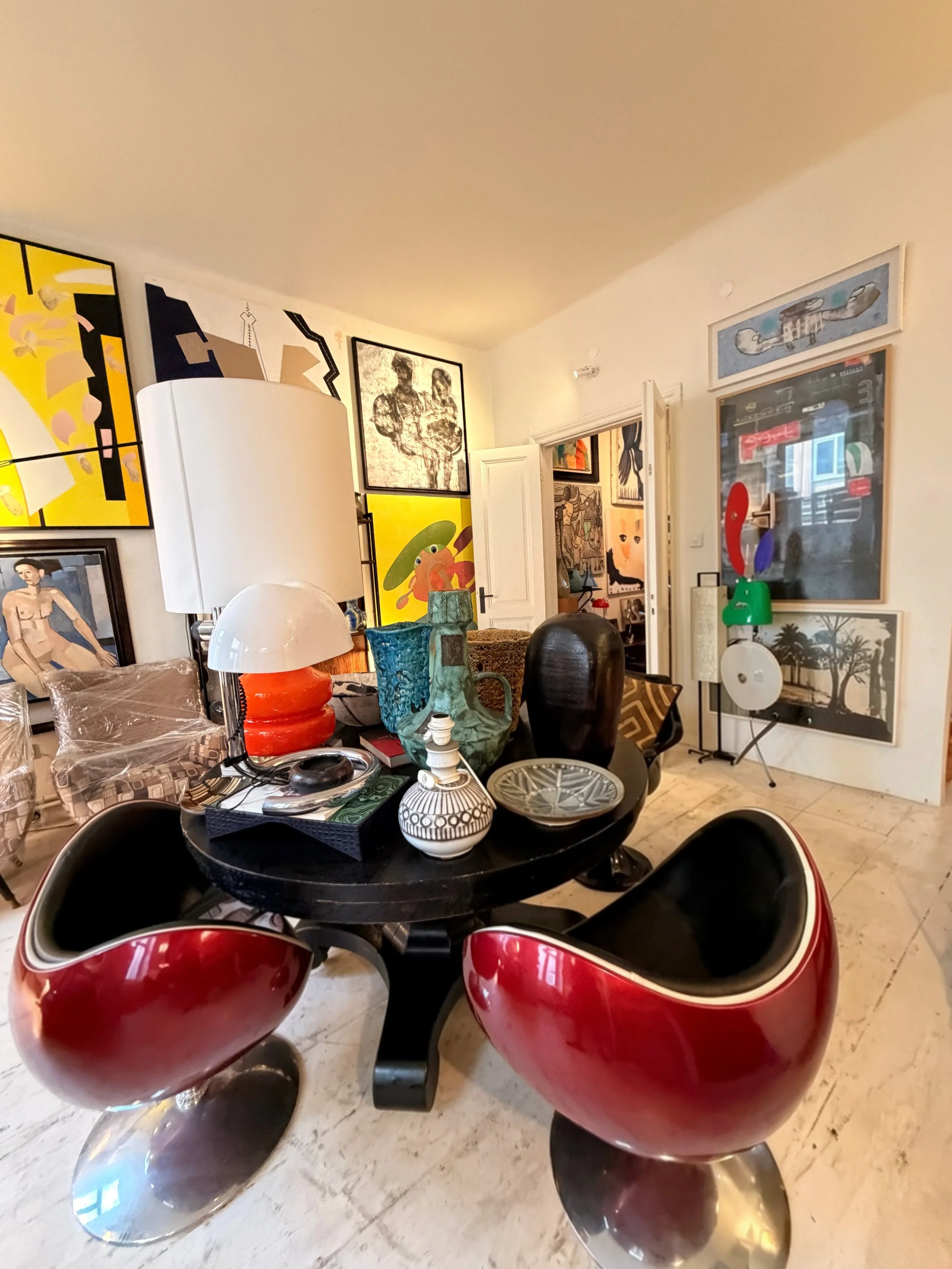
Hidden behind an unmarked door, it's a private home, museum and gallery filled with Mid-Century Modern and contemporary art, furniture, lighting and objects. You need to be escorted inside, which makes discovering it feel even better.
And then: sensory overload.
Forget perfectly styled rooms with a sofa, two chairs and an artfully placed lamp. The house is absolutely packed. Furniture, lighting, sculpture, art and objects sit beside, behind and on top of one another. Your eye doesn't quite know where to land.
The standouts for me were the 1970s Space Age pieces—sculptural furniture and lighting that somehow felt both completely of their era and incredibly current.
See the two spaces together. One moves through centuries of textiles, antiques, art and collected objects; the other throws you into Mid-Century and Space Age design.
Together, they make a pretty compelling argument for forgetting about periods entirely and simply buying what you love.
What a discovery.
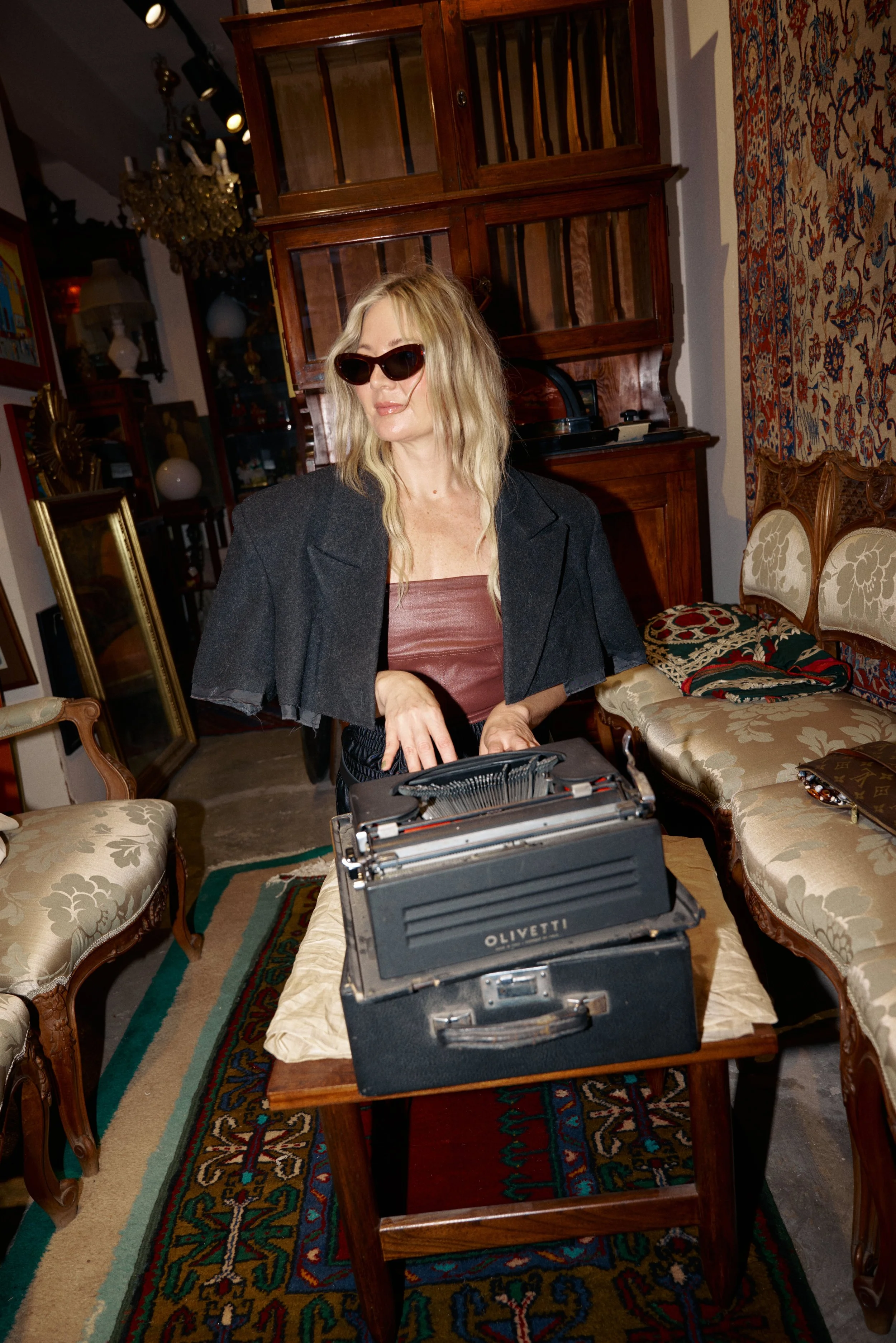
Kale Antik, owned by Özgür Meral, became one of my favourite places in Istanbul—and the backdrop for many of my favourite photos from the trip.
Part of that was the collection itself. Incredible 1960s lighting sits alongside contemporary ceramics, textiles, paintings, furniture and objects from completely different periods. There is no rigid allegiance to an era or style. You might walk in looking at a vintage light fixture and five minutes later find yourself obsessed with a contemporary ceramic work.
But what made Kale Antik special was the freedom to explore it.
They let me wander, move through the space, try things, photograph things and essentially play. I wasn't being ushered through a precious showroom. I was allowed to interact with the objects and be creative with them—and inevitably, those became some of the best images I took in Istanbul.
There's generosity in that.
It also reinforced something I kept noticing throughout the city: the best spaces don't feel designed around a single period. They're built around the personality of the person collecting.
At Kale Antik, a 1960s light fixture can live beside a contemporary ceramic, a textile and a painting and somehow the whole thing works.
Go for the antiques. Stay long enough to see what you weren't looking for.
And then there is Gem Alf.
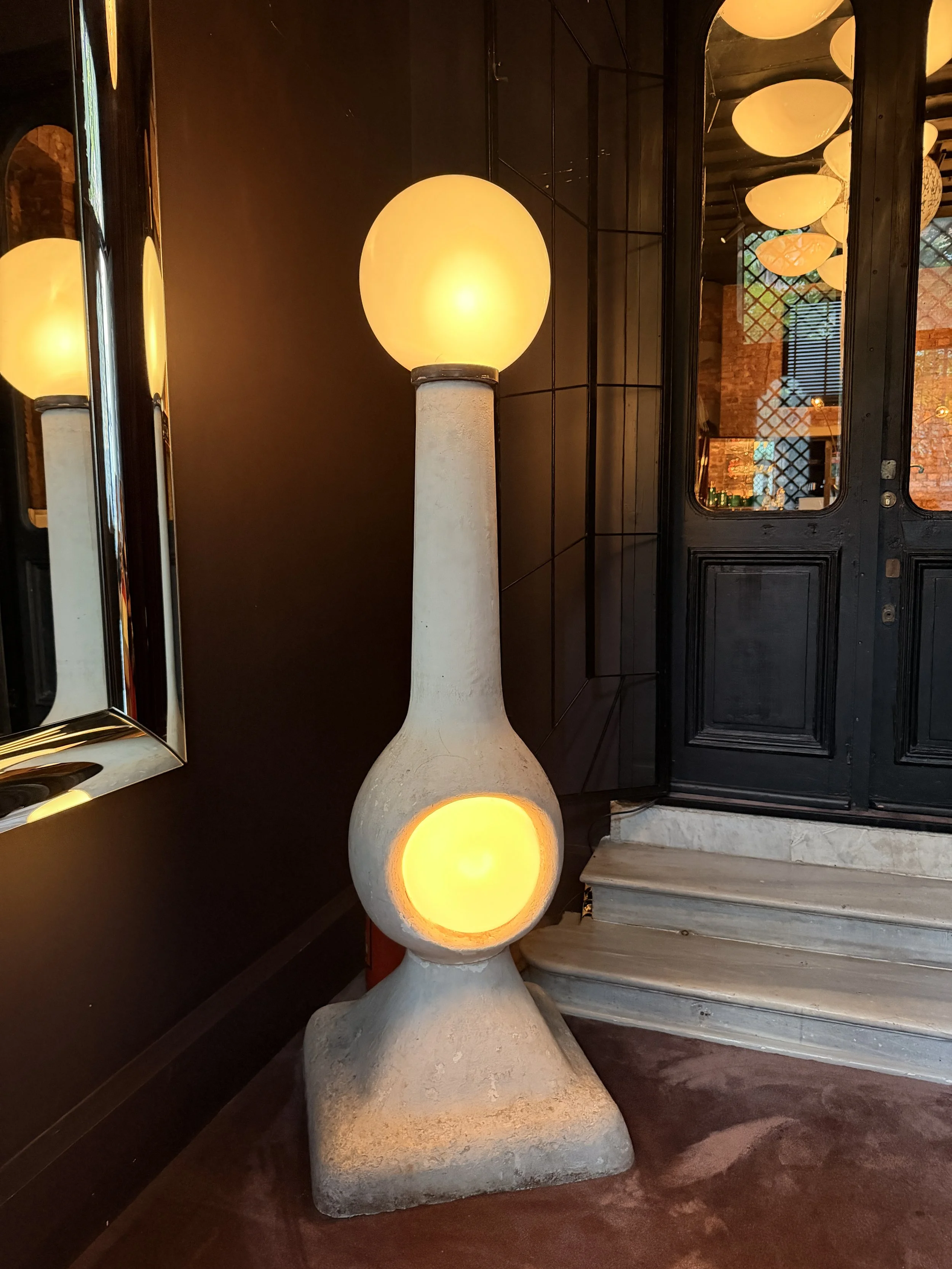
Gem has spent more than a decade collecting, curating and exhibiting curiosities and rare finds. His approach isn't about pedigree for pedigree's sake. He looks for objects with presence—things that carry some trace of another time—and then refurbishes, repositions and combines them until they become something new.
But that's the official explanation.
Here's what I walked into:
The owner was drinking wine with a friend at a burlwood table. Underneath them, a deep eggplant rug. Draped across the table, black lambskin. Beside them, an enormous 1970s silver wine bucket.
It wasn't staged.
They were just... having a glass of wine.
This is fuck-you chic.
And suddenly I understood the place.
Nothing felt overly decorated or "styled." Beautiful objects from completely different periods simply existed together because someone with a very good eye decided they should.
That's one of the biggest design lessons I took from Istanbul: stop worrying so much about whether things match.
A 200-year-old object can sit beside something from 1972. Burlwood can meet lambskin. Silver can meet eggplant. Important art can live beside something strange found at a market.
The point isn't the period.
The point is the eye.
FEY: FOR THE WOMAN, NOT THE GIRL
There are stores you shop and stores that immediately tell you something about the woman who created them.
FEY is the latter.
Founded by Fatoş Yalın Arkun, FEY sits in Nişantaşı and brings together its own clothing, vintage accessories, objects and pieces sourced from designers around the world. But what I loved immediately was that this isn't fashion for the girl.
This is fashion for the woman.
Yalın Arkun has the résumé to back up that point of view. She began her career at Vizon, worked at Turkish fashion retailer Yargıcı and went on to spend years at Marie Claire Türkiye. In 1989, she became the first person in Türkiye to officially carry the title of fashion editor on a magazine masthead. Eventually she left publishing and created FEY—not simply as a store, but as a space built around her own eye.
And you can feel it.
Nothing is trying too hard. There is vintage mixed with contemporary design, great accessories, beautiful fabrics and pieces that don't depend on whatever trend we're apparently supposed to be wearing this month. FEY describes its philosophy as ageless and timeless—things that can't really go out of fashion because they were never particularly interested in being fashionable in the first place.
Then Fatoş gave me a preview of a limited-edition silk collection that was still being developed, using hand-printed imagery taken from paintings by Güven Zayrek.
Naturally, I fell in love.
I bought the collared shirt and the skirt.
There was some discussion about whether they were actually meant to be worn together.
They are now.
I'll wear them as a set and then mix both pieces into my wardrobe throughout the fall—which is exactly what I want clothes to do.
But the part of the experience I'll remember most had nothing to do with what I bought.
The pieces weren't even completely finished. That day, FEY's seamstress added buttons and tailored them specifically for me. A few hours later, the finished pieces were delivered to my hotel.
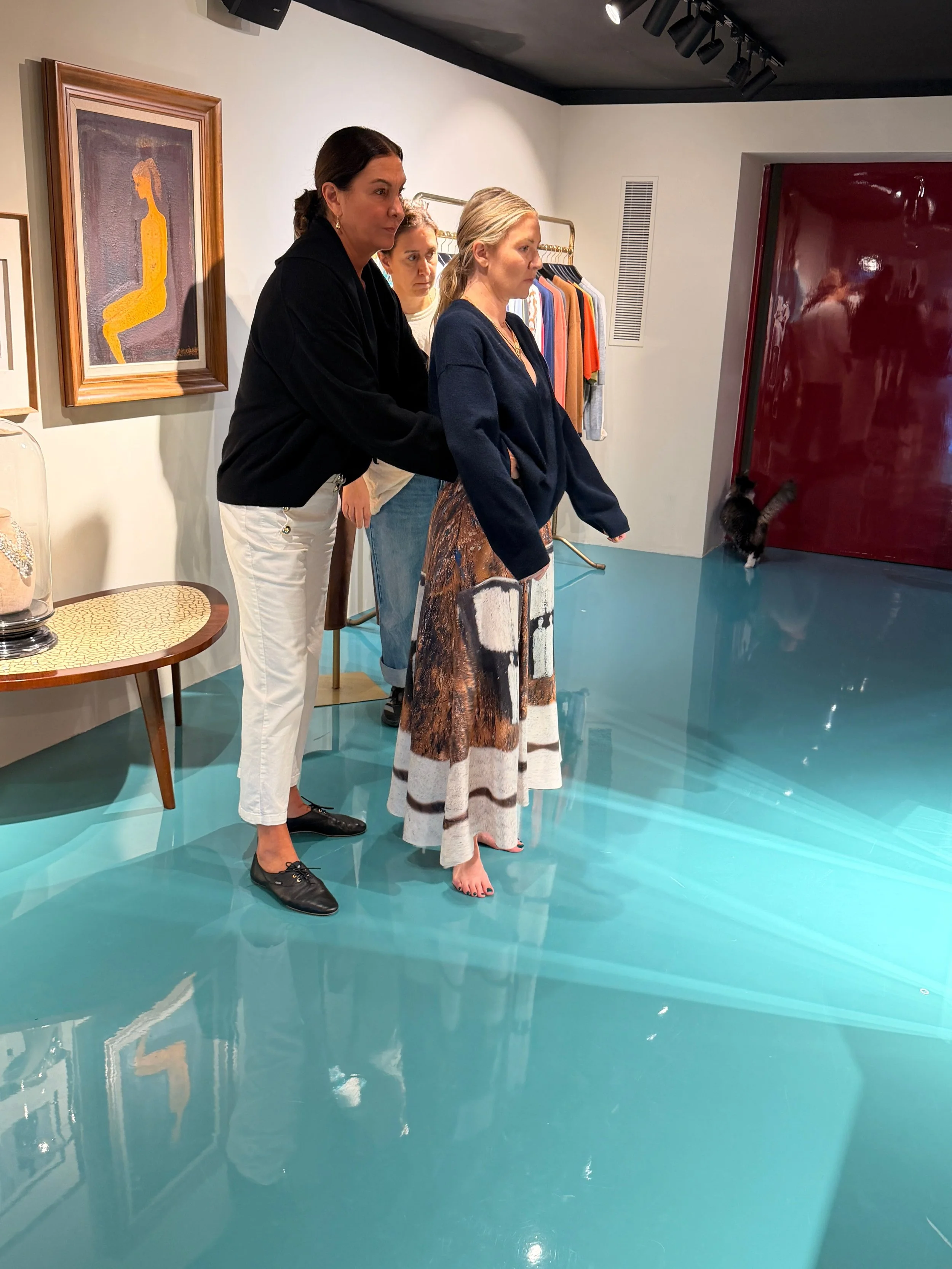
That is service. But more than that, that is Istanbul.
It was another example of something I experienced again and again throughout this trip: an extraordinary generosity toward guests. Someone offers you tea. Someone opens a door that isn't normally open. Someone lets you play with their collection. Someone finishes a piece of clothing that isn't technically ready yet and sends it across the city so you can have it before you leave.
The things I bought will remind me of Istanbul.
But it's the people behind them that made me want to bring them home.
FOR THE EYES: VINTAGE RIMA
Possibly one of my favourite discoveries of the entire trip.
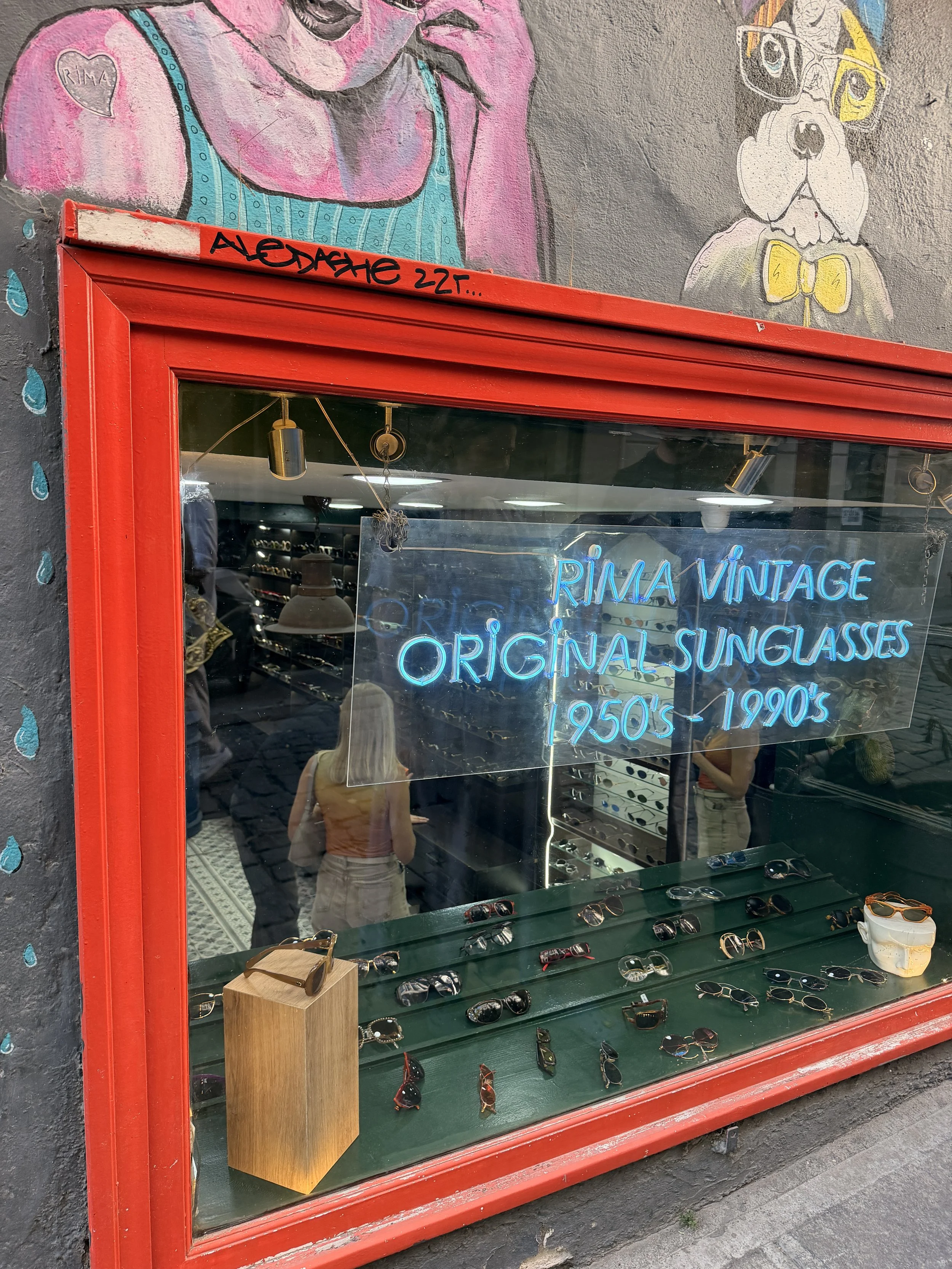
Vintage Rima is basically a museum for your face.
The store is packed with vintage designer eyewear spanning decades—from extraordinary early frames through the 1950s, '60s, '70s, ‘80s, and 1990s.
There is something wonderfully Istanbul about walking into a tiny space and realizing the person behind the counter has assembled an incredibly specific collection.
The surrounding street is worth exploring too—it's also home to the Cat Museum and other vintage shops—but Rima was the standout for me.
Consider yourself warned.
THE HAMMAM: TARİHİ ÇEŞME HAMAMI 1720
Book a hammam.
Actually, here's my better travel tip: book the hammam for shortly after you land.
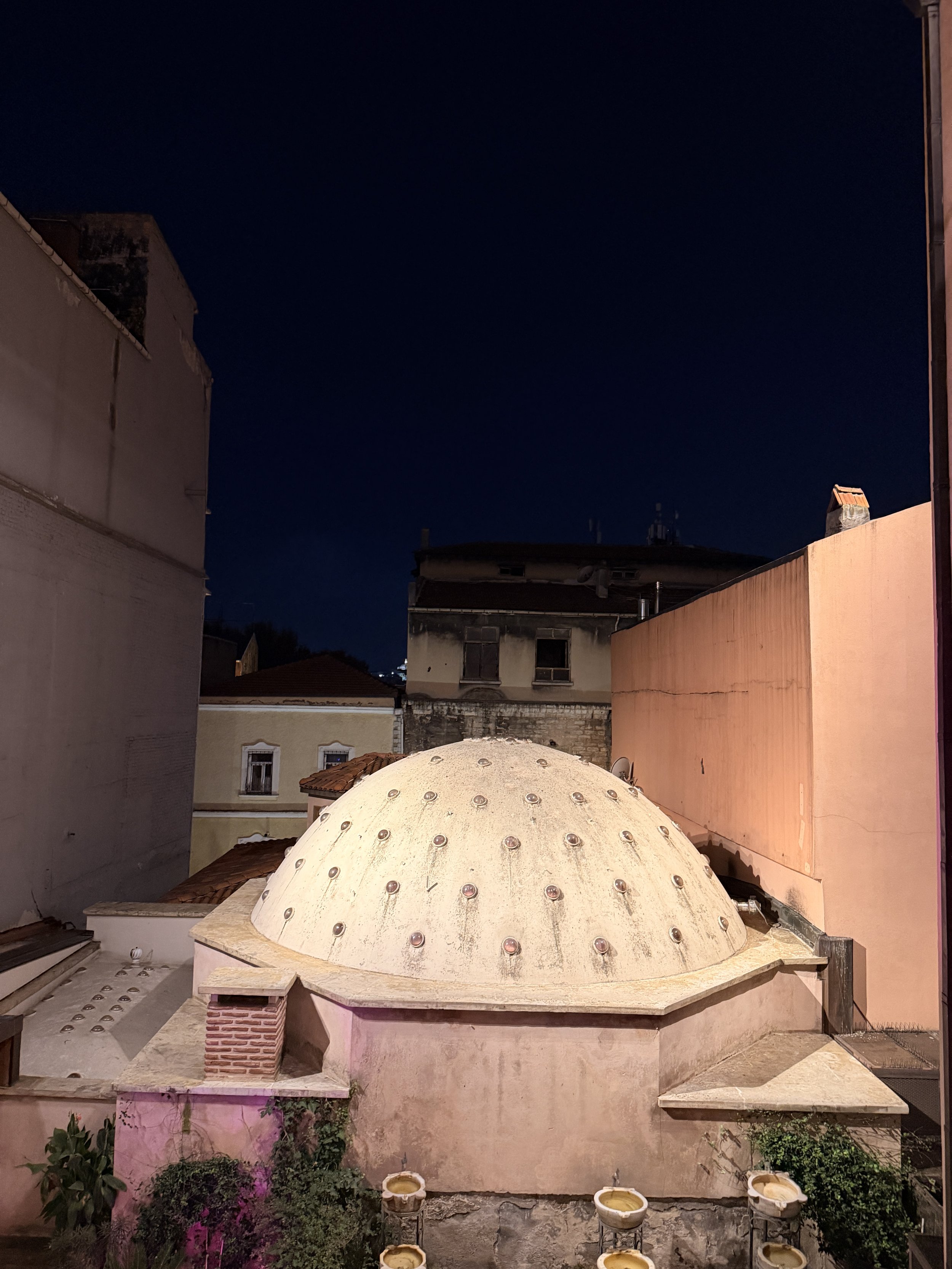
After an overnight flight, instead of spending the day fighting jet lag, I went to Tarihi Çeşme Hamamı. The bath dates to the 1720s, during the Ottoman Empire's Tulip Period, and has retained its historic architecture.
The experience is gloriously theatrical: heated marble, water, scrubbing, mountains of bubbles and massage.
For a couple of hours, I felt transported into the world of an Ottoman sultana.
But beyond the fantasy of it, there is something practical about doing this at the beginning of a trip. After a long flight, it completely resets you. You're forced to stop, recover and arrive mentally as well as physically.
I'm officially adding arrival spa to my travel rules.
THE MUSEUM THAT SURPRISED ME: ISTANBUL MODERN
Do not skip Istanbul Modern.
This was one of my biggest surprises.
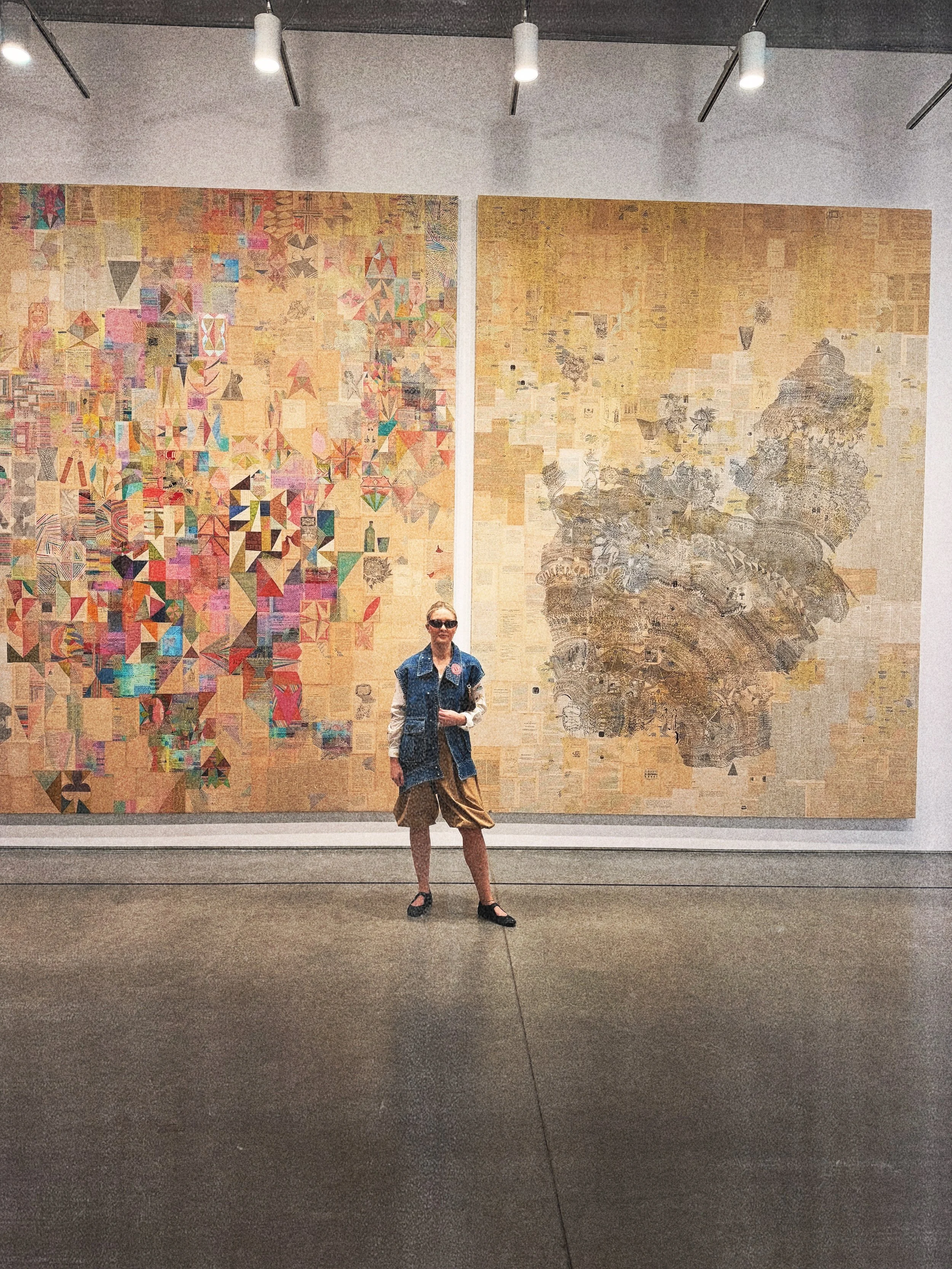
I went expecting a good museum and found a collection that had me constantly moving between artists I already knew and Turkish artists I immediately wanted to know more about.
The museum's collection deliberately places modern and contemporary art from Türkiye in conversation with artists and practices from other geographies. Its holdings include everyone from Fahrelnissa Zeid, Gülsün Karamustafa and Nil Yalter to Anselm Kiefer, Tracey Emin, Olafur Eliasson, Mark Bradford and Yoko Ono.
That's exactly what I want from travelling for art: not simply seeing familiar names somewhere new, but leaving with a list of artists to research when I get home.
THE GALLERY TO KNOW: GALERIST
If Istanbul Modern gave me the institutional introduction to contemporary Turkish art, Galerist gave me another way in.
Founded in Istanbul in 2001, the gallery has spent 25 years building relationships with artists across generations, including Nil Yalter, Semiha Berksoy, İpek Duben, Elif Uras and Hera Büyüktaşcıyan.
The timing of my visit couldn't have been better.
Galerist is celebrating its 25th anniversary with Labour of Love, bringing together nearly 50 artists who have been part of the gallery's history. Rather than feeling like a retrospective, the exhibition mixes important earlier works with newly produced pieces and becomes a crash course in the relationships and artists that have shaped the gallery—and, by extension, a piece of Istanbul's contemporary art story.
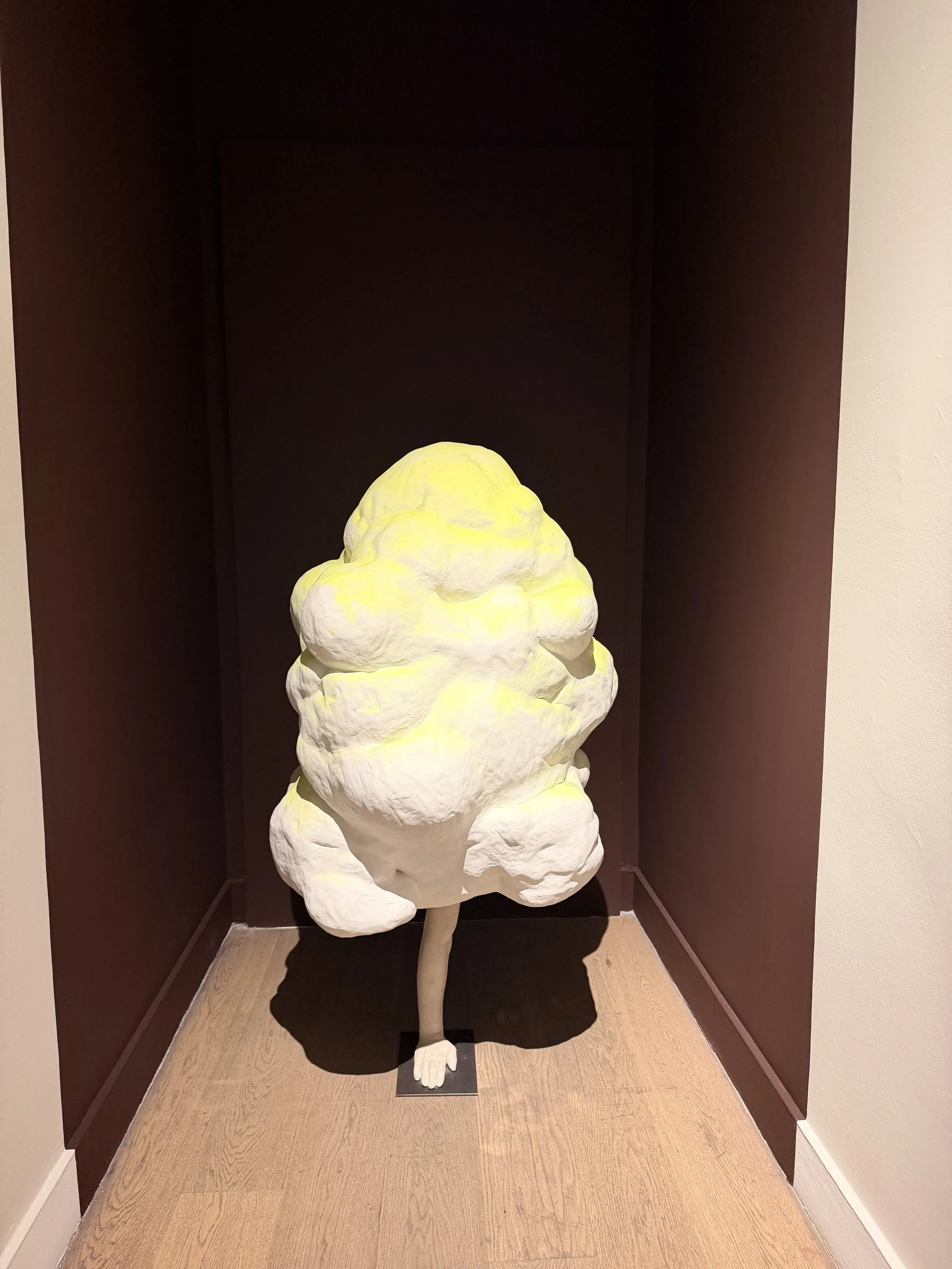
And then there's the setting.
Since 2011, Galerist has occupied Passage Petits-Champs, a 19th-century building in Pera. Once again, Istanbul does that thing it does so well: contemporary art living inside layers of history.
For anyone coming to Istanbul wanting to understand the contemporary art scene beyond the fair, put Galerist on the list.
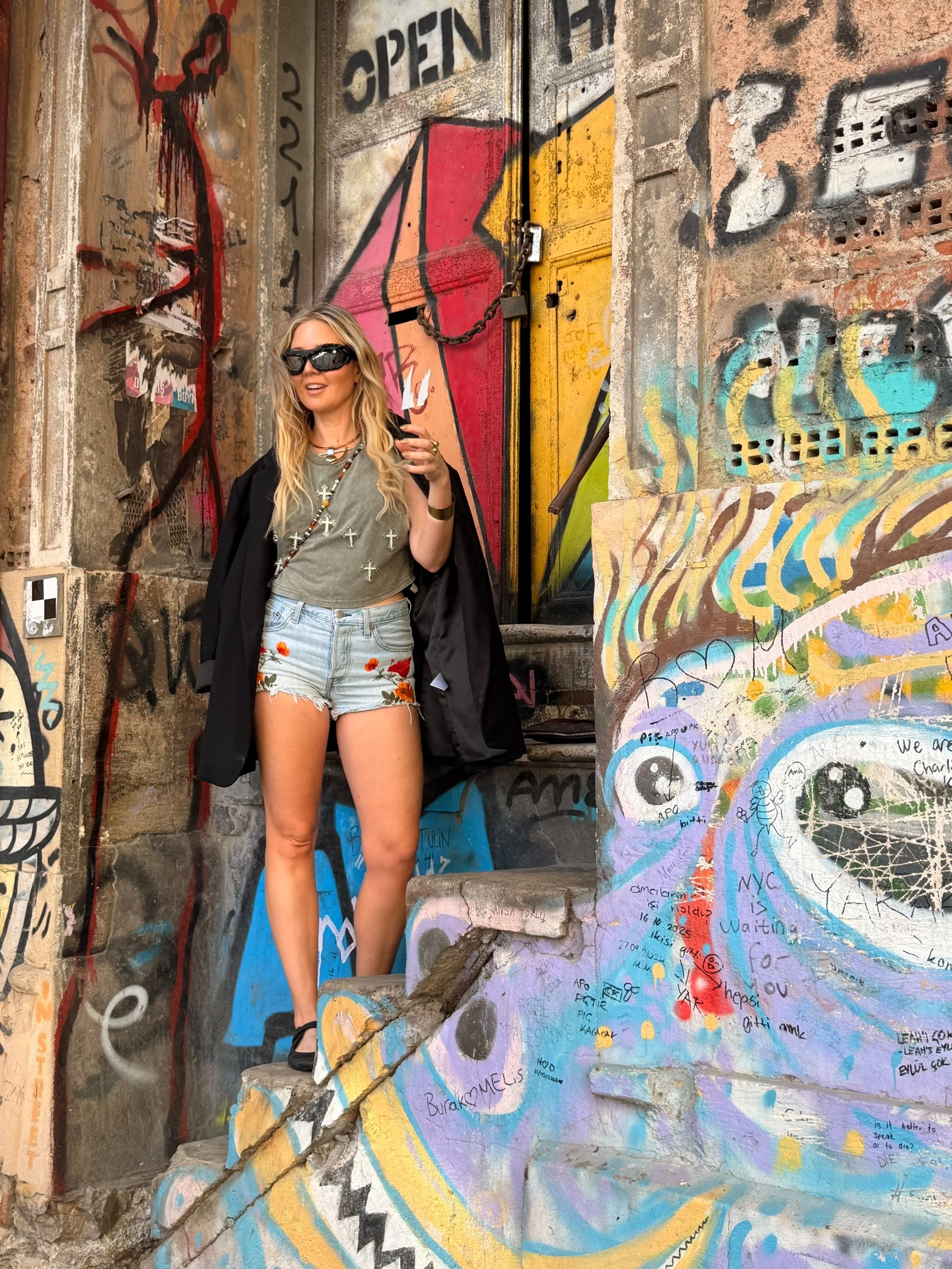
EAT: ARKESTRA
There is no shortage of extraordinary food in Istanbul, at practically every price point.
But my favourite dinner was Arkestra.
Chef Cenk Debensason brings together modern European cooking and global influences in a 1960s residential villa, and the entire experience feels considered without becoming overly precious. The restaurant is joined by Ritmo, hidden behind velvet curtains, and an upstairs Listening Room devoted to cocktails and vinyl.
That combination—food, music, art, interiors and atmosphere—felt particularly Istanbul to me.
Nothing exists entirely on its own.
THE THING I'LL REMEMBER
What stayed with me most wasn't one monument, meal or work of art.
It was the feeling of moving between public Istanbul and private Istanbul.
There is the city everyone sees—the Bosphorus, mosques, palaces, İstiklal Avenue, the Grand Bazaar. And then there is another Istanbul that seems to reveal itself only once someone opens a door and invites you inside.
Behind it might be an antique collection, an extraordinary apartment, a hammam, an atelier, a restaurant hidden inside an old villa or simply someone offering you another tiny glass of tea.
That's where Istanbul became interesting to me.
The city doesn't give you everything immediately.
You have to look.
And for someone who loves art, objects and the thrill of discovery, that's probably why I loved it.
Next Direct Message: Inside Contemporary Istanbul and what the fair taught me about the artists, galleries and business behind the art.
My trip to Istanbul was hosted in part by Contemporary Istanbul. Flights were provided courtesy of Turkish Airlines via PinkNet Studio. As always, the places and opinions included here are my own.