
Some cities feel like exhibitions. Québec City is one of them.
The stone streets, the river light, the fortified walls, everything feels curated. But what makes the city interesting right now is how contemporary art is moving through it. During my recent trip I was there for the Québec City Biennale, which turns the entire city into a kind of roaming exhibition.
What I love about Québec City is that you can move easily between centuries: one moment you're inside a historic fortification, the next you're looking at experimental installation work.
For 48 hours, this is how I explored it.
THE BIENNALE
The reason I was in Québec City this time was the Manif d’art, The Quebec City Biennale, and it’s a special one.
It’s the only winter contemporary art biennale in North America, which completely changes the experience of seeing art. Snow, ice, river light, and northern landscapes become part of the exhibition itself.
The 2026 edition, Manif d’art 12, brings together more than 60 artists from 18 countries across 41 venues throughout Québec City and surrounding regions. Curated by Didier Morelli, the exhibition explores climate transformation, northern landscapes, and the body through installations, performance, video, sculpture, and public art.
The theme, Splitting Ice / Briser la glace, examines how snow, ice, thaw, and water shape our relationship to land and climate change, connecting Arctic environments with global coastal geographies.
It’s ambitious, poetic, and incredibly timely.
START HERE
The central exhibition is at Espace Quatre Cents in the Old Port.
Large-scale installations and film works explore Arctic landscapes, water systems, and environmental memory.
Standouts include:
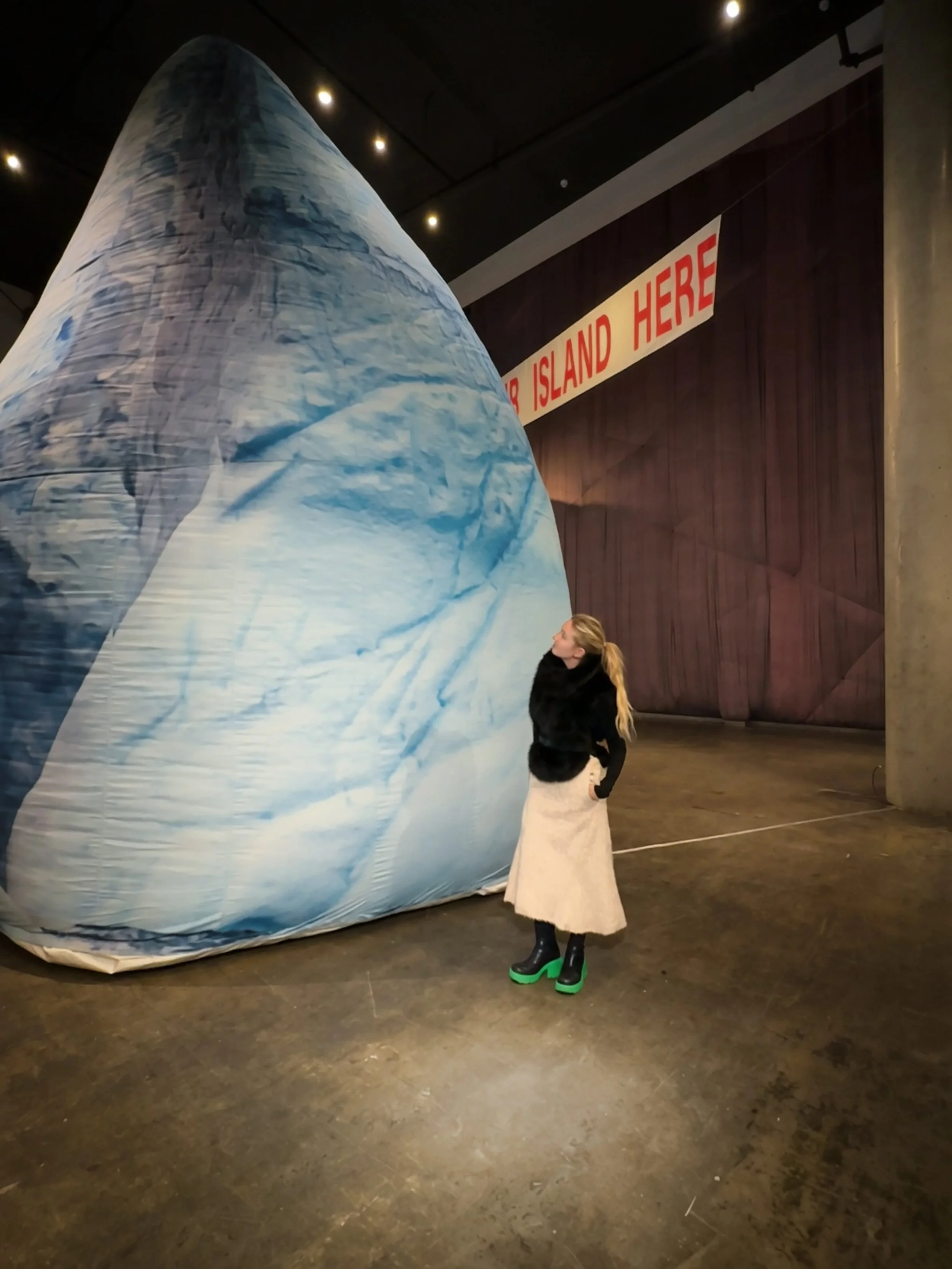
• Jessie Kleemann — ILULIAQ / ICEBERG, a monumental inflatable iceberg referencing Arctic ice melt.
• nibia pastrana santiago — YOUR ISLAND HERE, an embroidered flag exploring colonial histories and coastal territories.
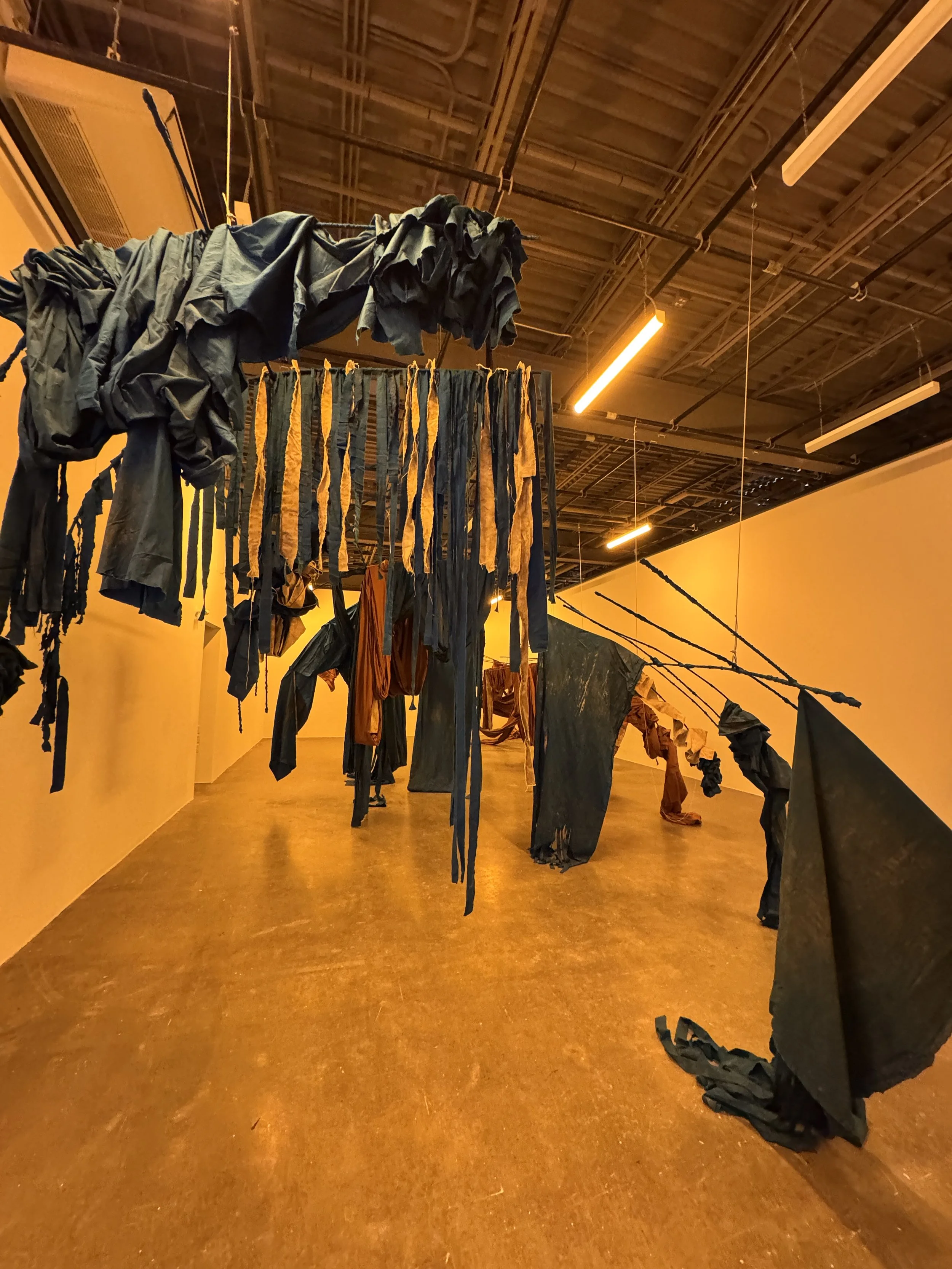
• Judy Watson — clouds and undercurrents, a textile installation reflecting on water systems and environmental memory.
• Couzyn van Heuvelen — Nitsiit, sculpture drawing on Inuit material culture and northern identity.
• Maureen Gruben — Nuna, a film installation exploring Arctic landscapes and Indigenous ecological knowledge.
PUBLIC ART ON THE WATER
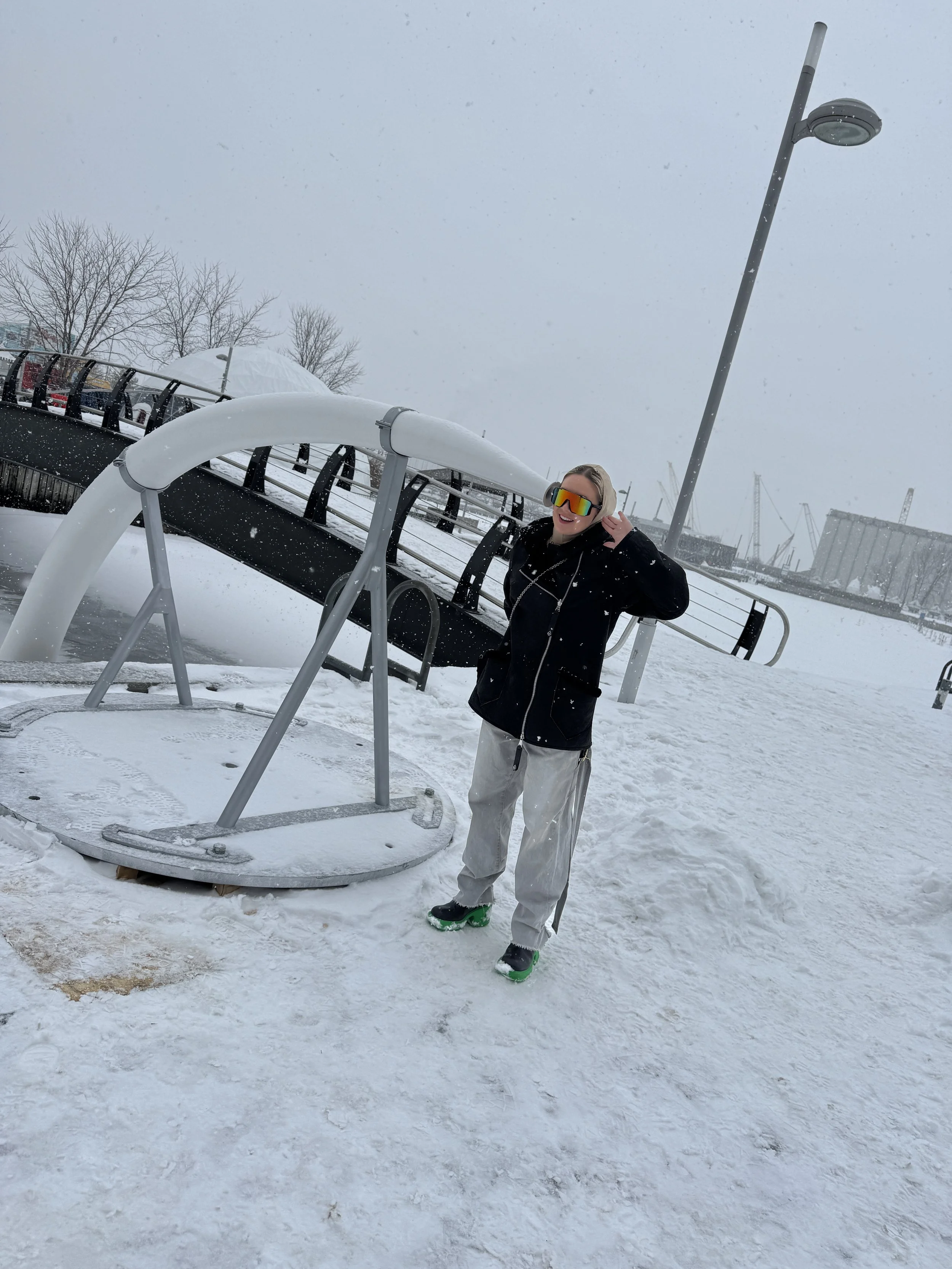
Along the St. Lawrence at the Port of Québec, artist Tania Candiani presents Frozen River Listener, a sculptural listening device that allows visitors to hear the frozen river and surrounding landscape.
It’s one of the Biennale’s most poetic works.
SAINT-ROCH: CONTEMPORARY ART DISTRICT
A short walk or taxi from Old Québec, Saint-Roch hosts several Biennale venues.
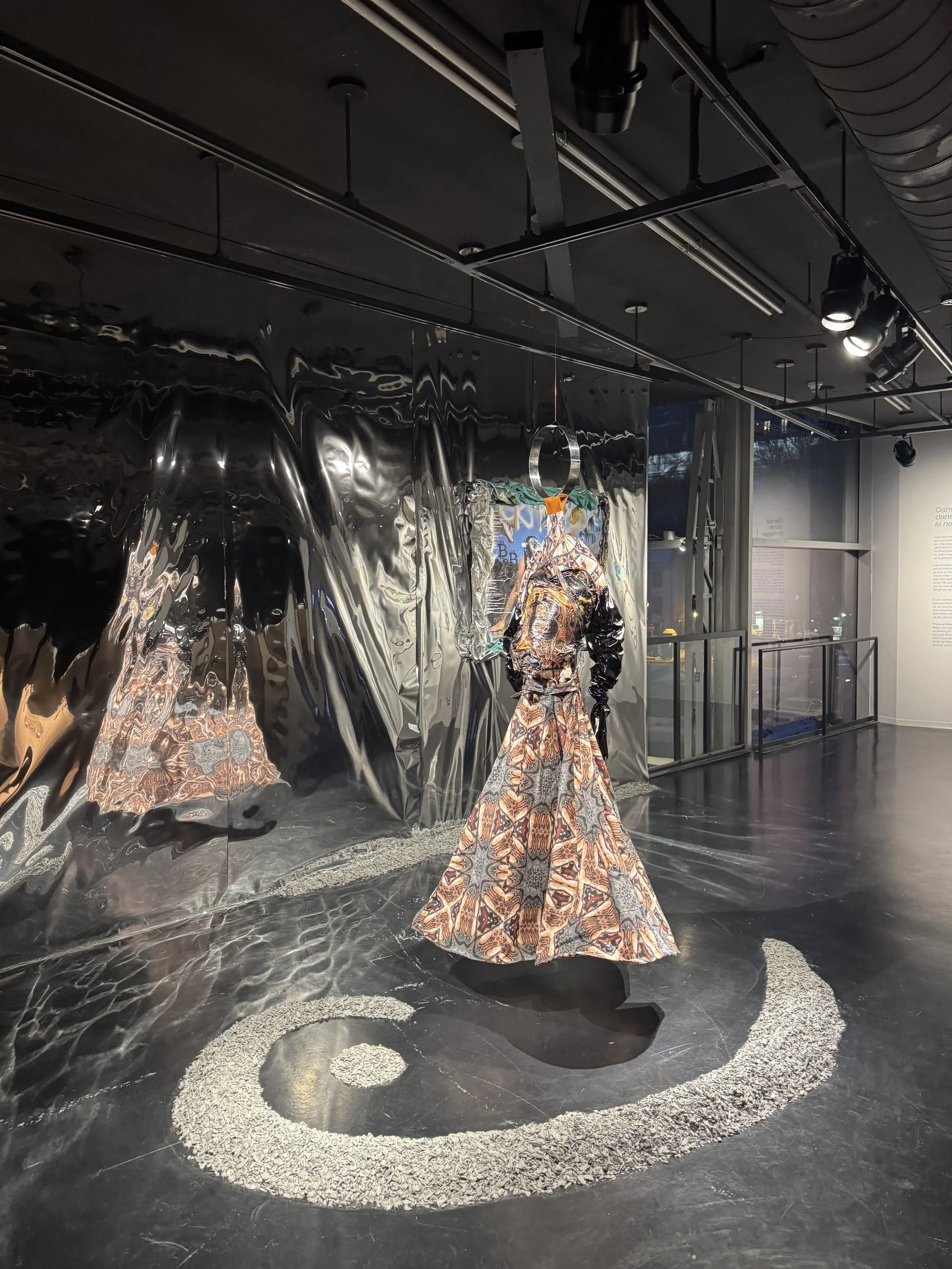
At L’Œil de Poisson, Afro-Brazilian artist Jota Mombaça presents Ghost 25: If You Can’t Be Free, a monumental installation created from textiles submerged in the St. Lawrence River.
Nearby venues include:
• VU – Centre de diffusion et de production de la photographie, featuring work by Carolina Caycedo on rivers and environmental restoration.
• La Chambre Blanche, where Elias Nafaa presents an installation of frost-covered resin shells reflecting on fragility and preservation.
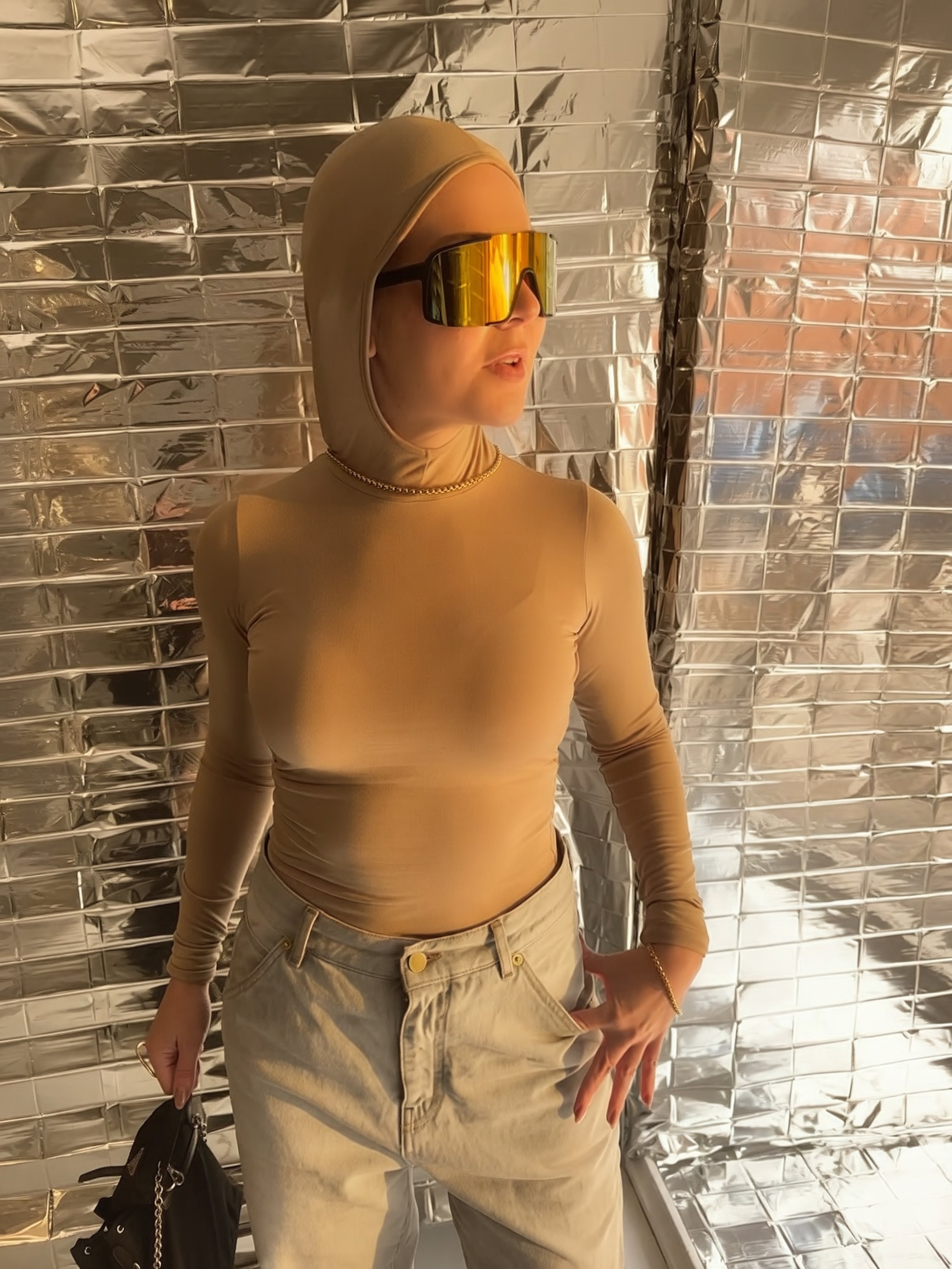
INDIGENOUS PERSPECTIVES
At the Huron-Wendat Museum in Wendake, artist Nicolas Renaud presents RÉGÉNÉRATIONS, a mixed-media installation exploring Indigenous relationships to land and regeneration.
ACROSS THE RIVER
The Biennale even extends across the St. Lawrence.
Taking the Québec–Lévis ferry becomes part of the exhibition itself. Artist Sylvie Tourangeau presents a performance work exploring movement between territories and embodied relationships to landscape.
At the Lévis terminal, a key photographic work by Lori Blondeau continues the Biennale’s exploration of Indigenous identity and feminist critique.
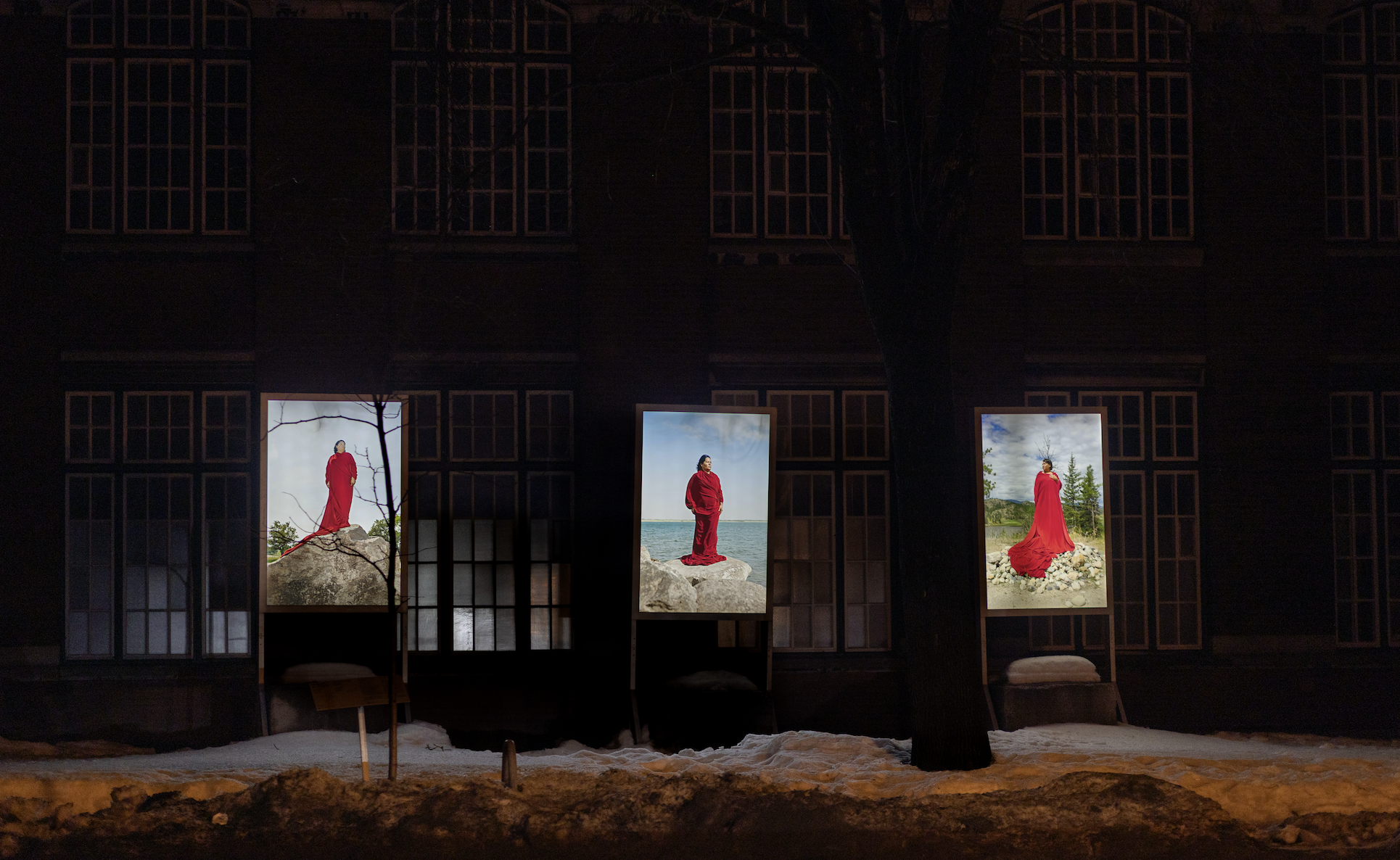
OUTDOOR INSTALLATION
At Domaine de Maizerets:
Artist collective Cozic presents Les 7 Continents, a large outdoor installation referencing global geographies and interconnected territories.
Seeing contemporary art outdoors in winter landscapes is one of the things that makes this Biennale unique.
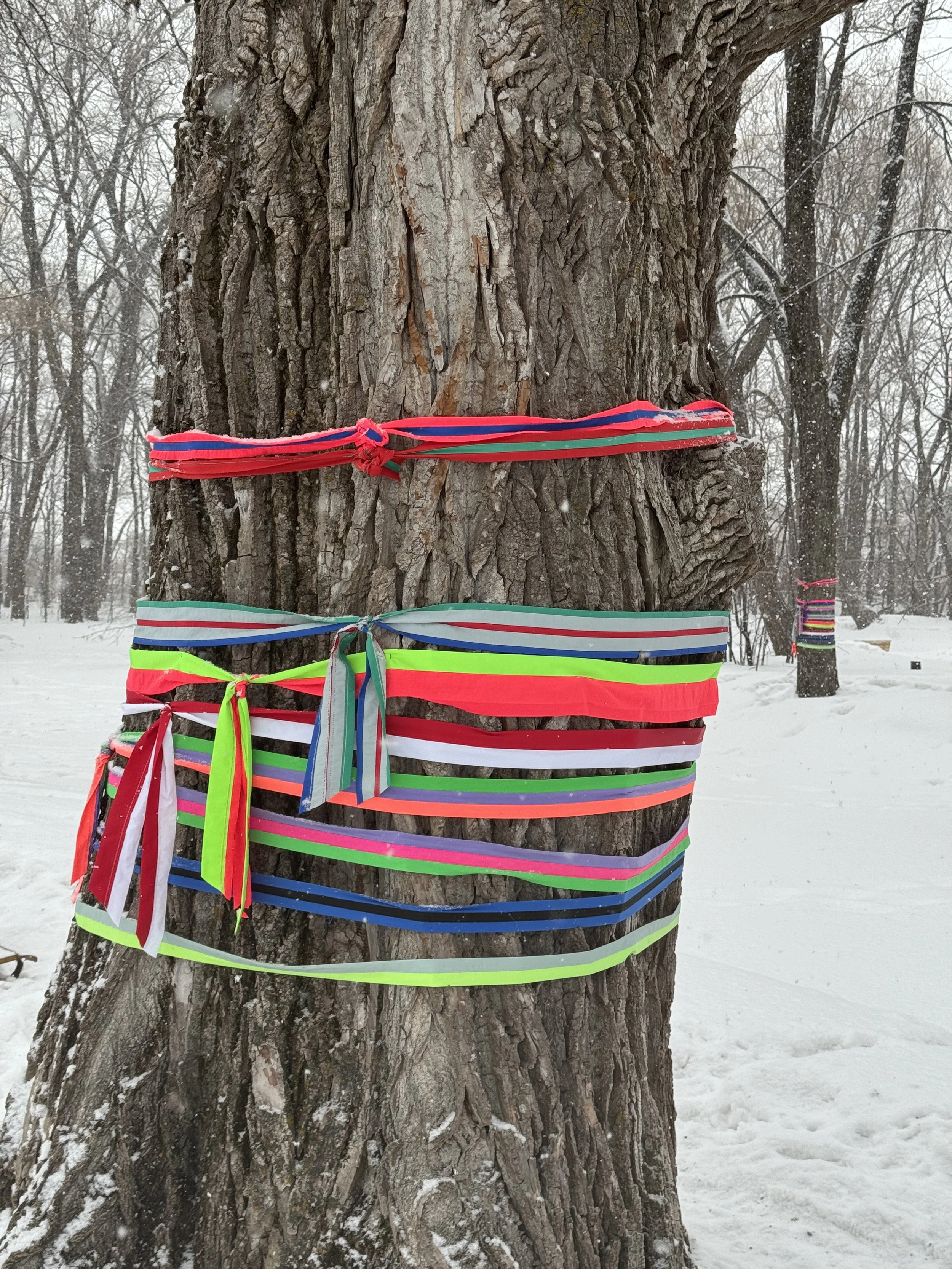
WENDAKE
Just outside the city is one of the most meaningful cultural stops in the region: Wendake.
Home to the Huron-Wendat Nation, Wendake offers an entirely different perspective on the region’s history and culture.
The highlight is the Huron-Wendat Museum, which presents the story of the nation through design, craftsmanship, and contemporary cultural expression.
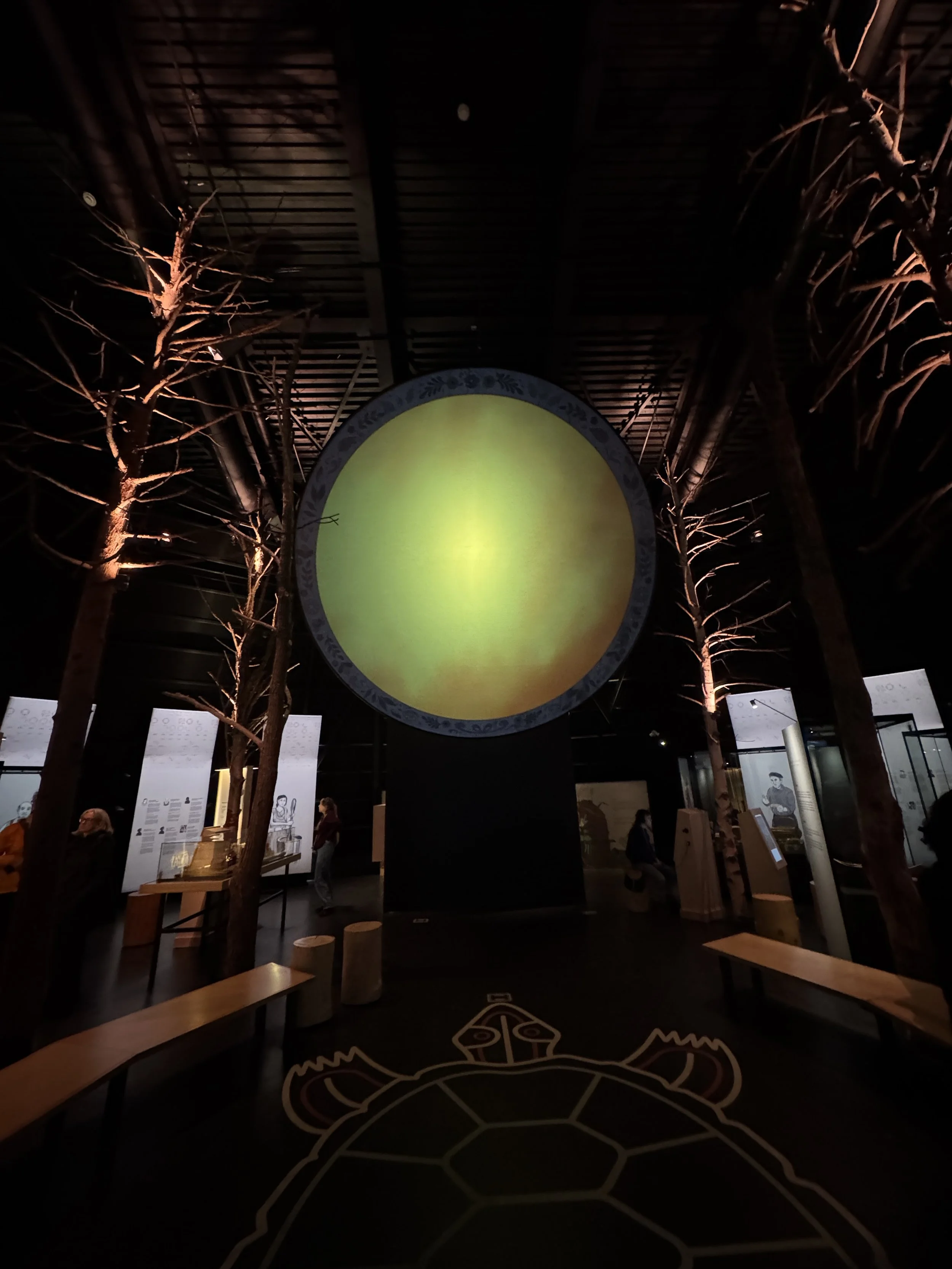
It’s thoughtful, powerful, and a reminder that Québec’s story extends far beyond its colonial architecture.
THE ICE HOTEL
Winter in Québec City has its own architecture.
Every year the Hôtel de Glace is built entirely from ice and snow.
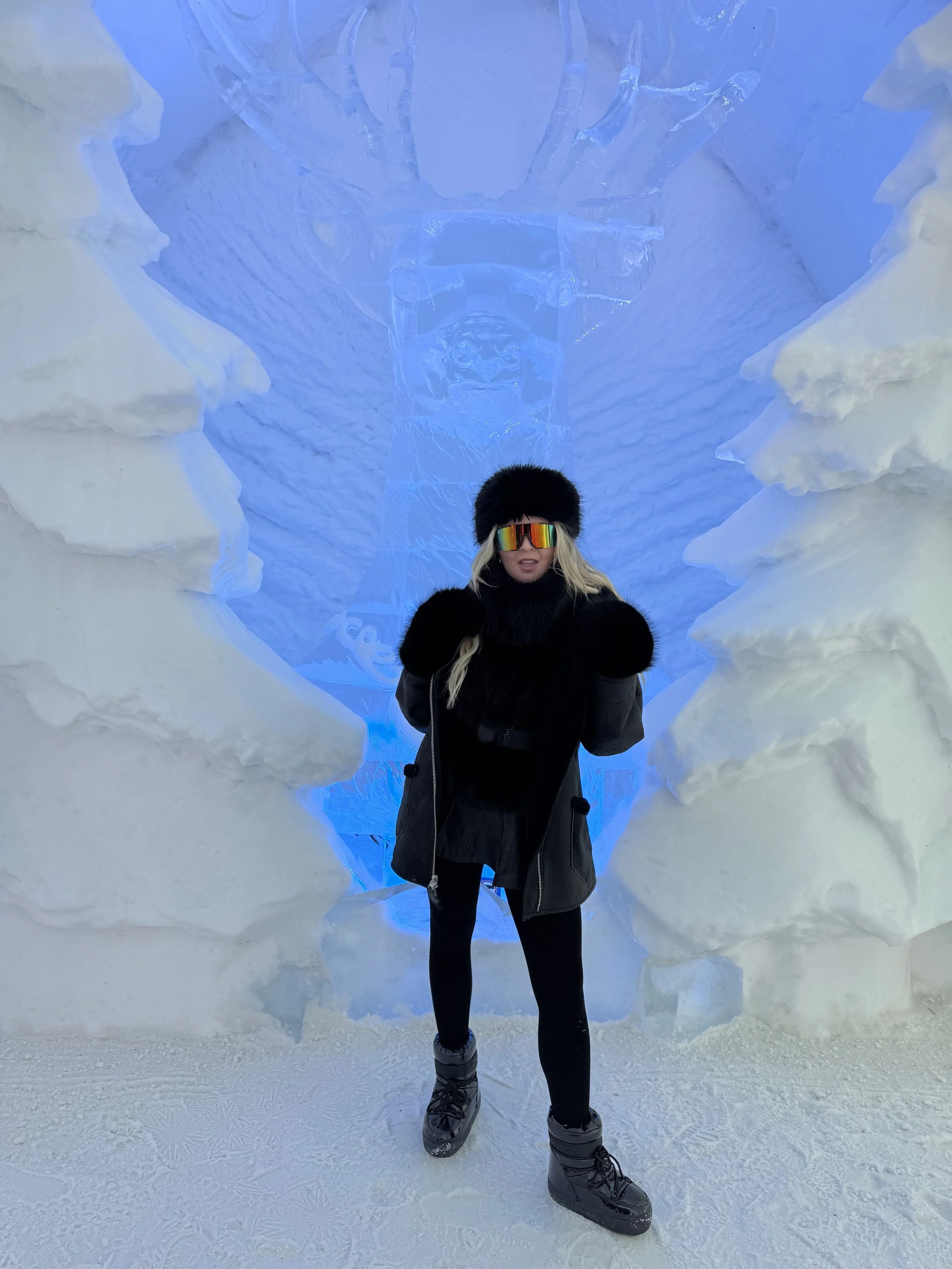
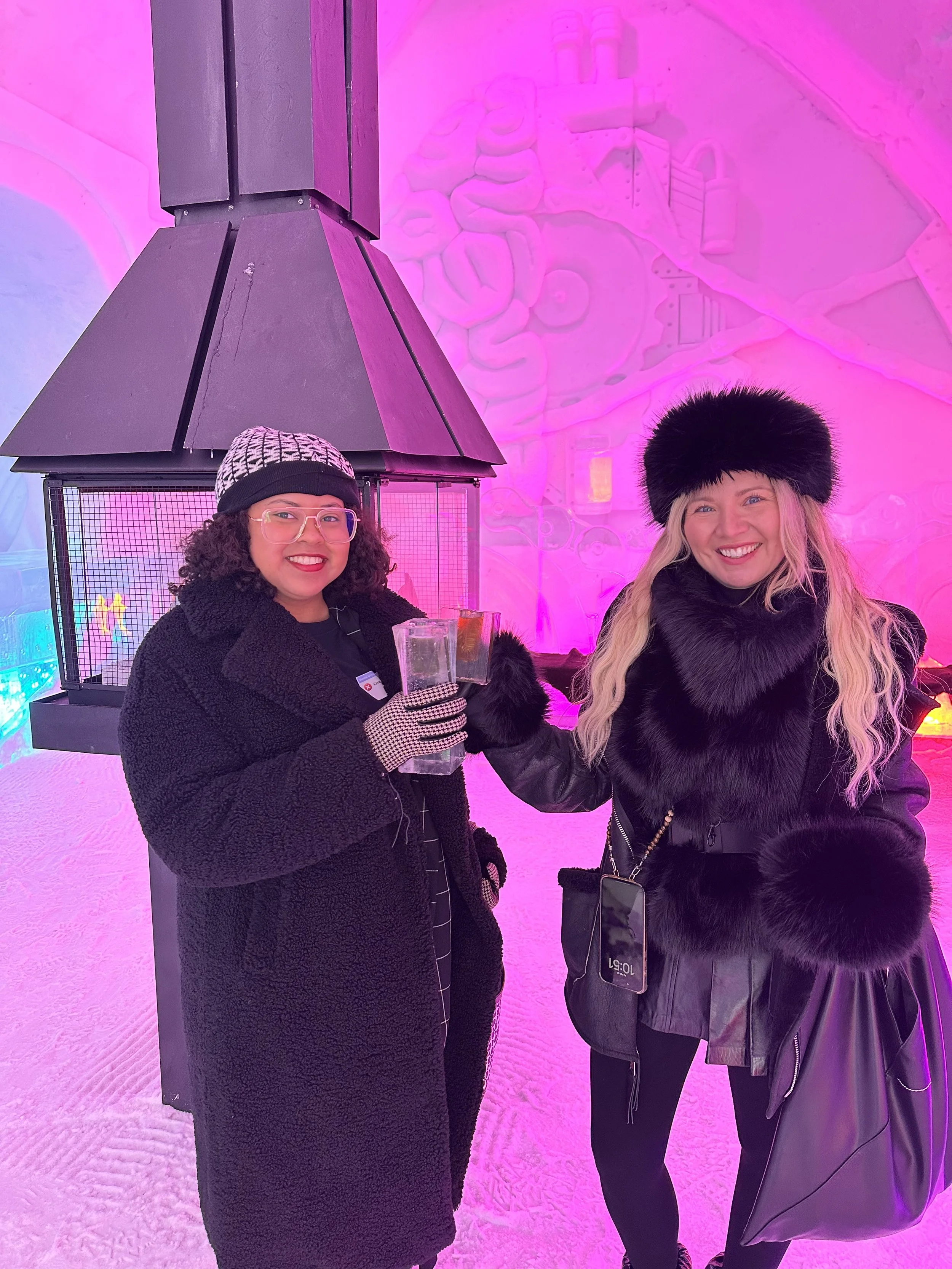
The structure is rebuilt each season by sculptors and designers — a kind of ephemeral architectural project. Even if you’re not staying overnight, walking through it is worth the trip. Ice corridors, sculpted rooms, glowing blue light.
Somewhere between art installation and fantasy hotel.
And yes — the cocktails come in ice glasses.
DINNER WORTH THE DRIVE
We had lunch at La Traite, which was one of the highlights of the trip. I would have gone back for dinner and look forward to doing that.
The restaurant focuses on Indigenous cuisine inspired by Huron-Wendat traditions — venison, bison, wild berries, maple, cedar — interpreted through contemporary technique.
The space is beautiful: warm wood interiors looking out toward the forest.
It’s a place where food, landscape, and culture all intersect.
OTHER PLACES I LOVED
Québec City has quietly developed a really interesting restaurant scene.
A few places I’d return to immediately:
ARVI — a chef’s counter where the cooks serve you directly. Intimate and inventive.
Buvette Scott — small, relaxed, seasonal plates and natural wine.
Chez Muffy — rustic Québec cuisine in a historic stone building.
For mornings:
Café Saint-Henri
Paillard
THE WALK
One of the best things you can do in Québec City is simply wander.
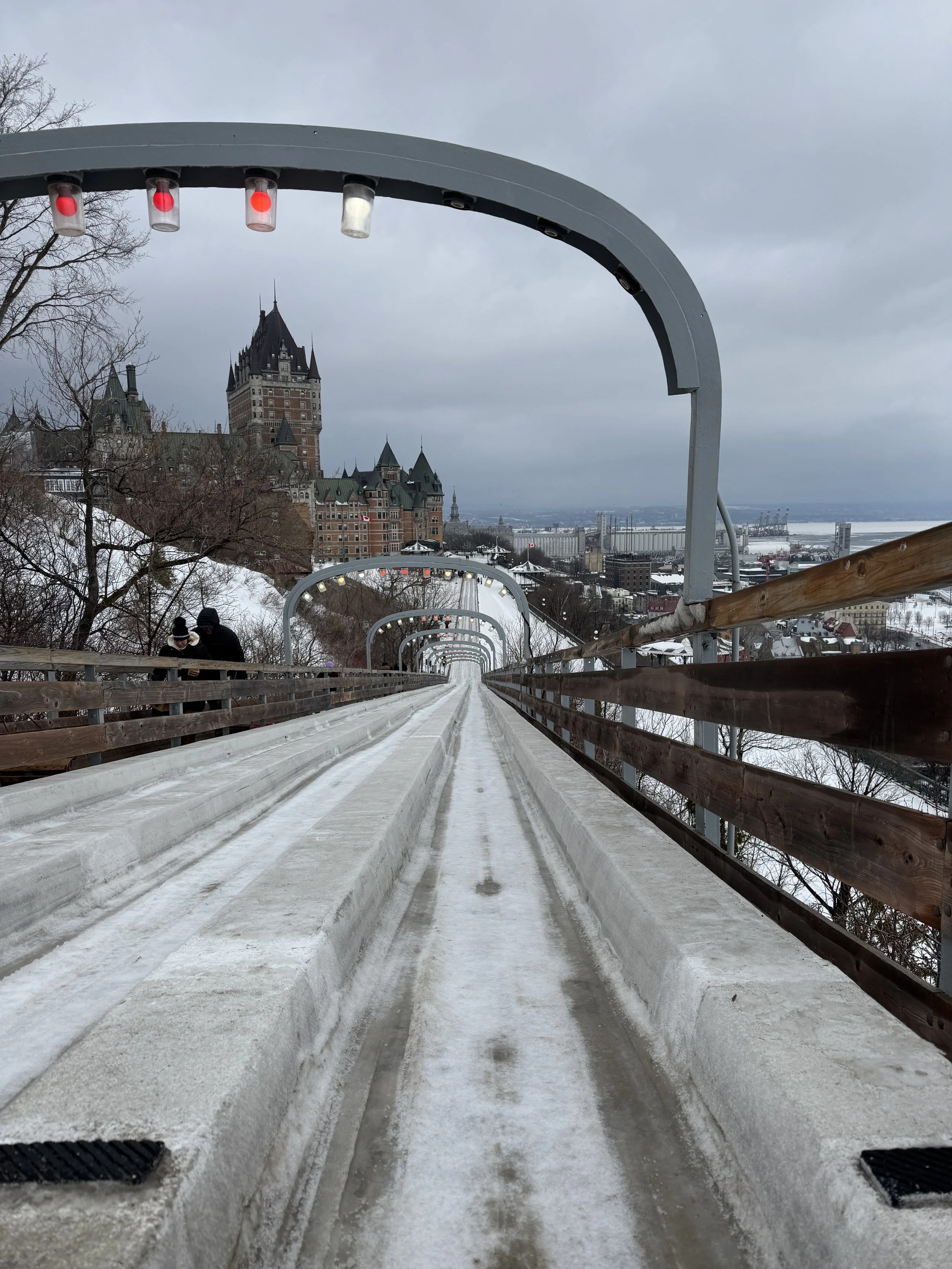
Walk through the Petit-Champlain District, up toward the iconic Château Frontenac, then along the Terrasse Dufferin overlooking the St. Lawrence River. You
Artists have been painting this exact view for centuries and you immediately understand why. Also, take the time to let your inner child out and do the toboggan ride.
48 HOURS
Day 1
Coffee in Old Québec
Québec City Biennial exhibitions
Musée national des beaux-arts du Québec
Dinner at La Traite in Wendake
Day 2
Visit Hôtel de Glace
Gallery hopping
Walk the river promenade
Long dinner at ARVI
Québec City manages to do something rare: it protects its history while still letting contemporary culture move through it.
Art in old stone buildings.
Indigenous culture just beyond the walls.
Experimental installations in a UNESCO-listed city.
It’s one of the most visually inspiring weekends you can have in Canada.
See you soon,
Deanne